SQE1 Exam Prep Basics: Stop Wasting Time on Passive Study
The SQE1 exam isn’t like your university finals. It’s 360 multiple-choice questions split over two papers, testing not just what you know but how fast you can apply it. The pass rates hover around 53-56%. That’s sobering. If you’re relying on passive methods like reading notes or binge-watching lectures, you’re setting yourself up for trouble.
Why? Because passive studying doesn’t build the retrieval skills you need for MCQs. You might feel productive highlighting case law or summarizing the SRA’s assessment specs, but none of it prepares you for the actual test.
Why Active Recall Works
Active recall is simple: instead of reviewing information, you force your brain to retrieve it. It’s the most effective way to learn for exams, especially ones like SQE1 where speed and accuracy matter. Research backs this up—studies show active recall improves long-term memory retention by 50% or more compared to passive methods Harvard Medical School.
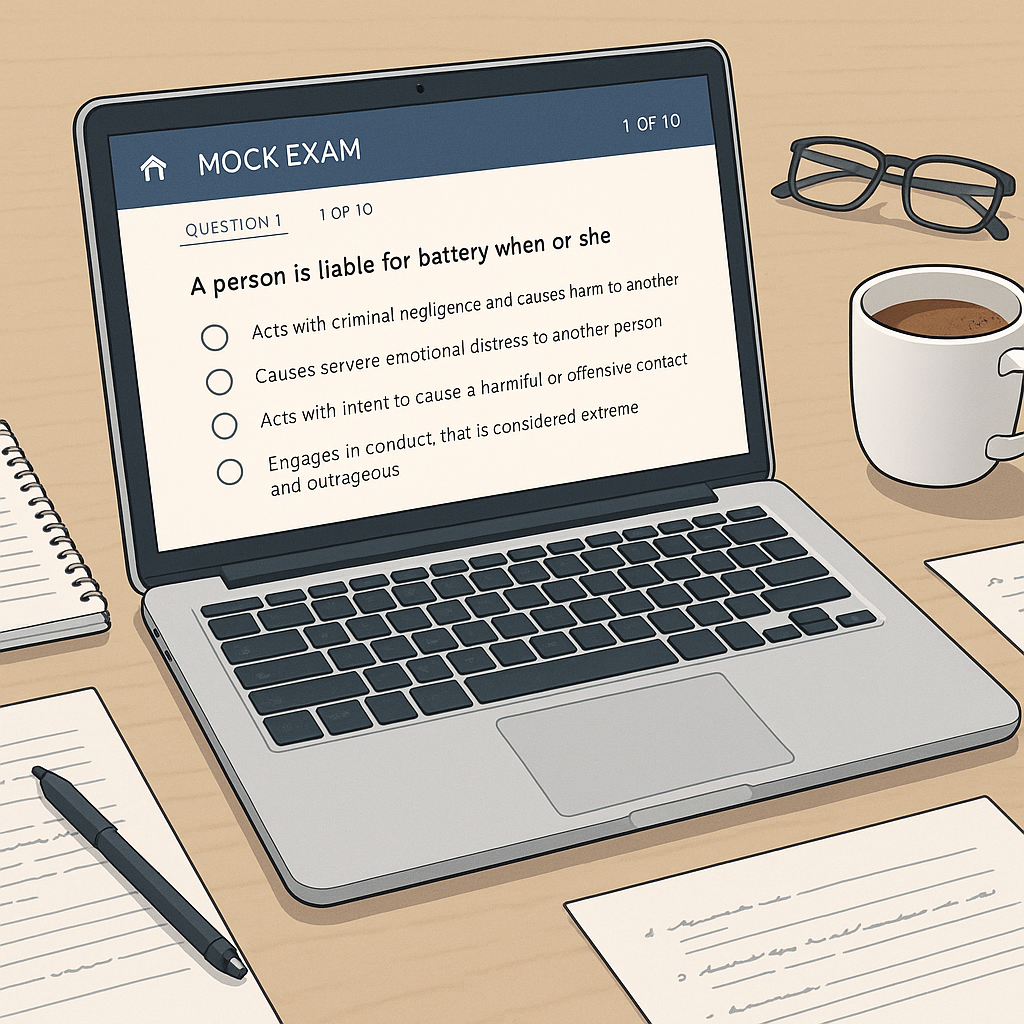
But how do you build active recall into your SQE1 prep? Enter focused MCQ drills. Practicing questions forces you to recall, apply, and analyze legal principles under pressure. The more you drill, the better your retrieval pathways get—making it easier to spot traps and eliminate wrong answers.
How SQE1 Drills Makes This Easy
Here’s the problem most candidates face: traditional prep courses (BARBRI, ULaw, BPP) are lecture-heavy, with limited question banks. You might get 200-300 practice MCQs, but you’ll burn through them quickly. Worse, they don’t tell you which topics you’re failing at—so you waste hours revising things you already know.
SQE1 Drills fixes this. It’s a pure active recall tool, built entirely around MCQ practice. You get unlimited drills with over 600 questions, plus ~100 new ones added daily thanks to AI. Every question maps directly to the SRA syllabus, so you’re practicing exactly what the exam demands. And the real-time analytics tell you your weakest areas (like Tort or Land Law), so you can focus your efforts where it counts.
Need to simulate exam conditions? The platform’s Exam Mode replicates the real SQE1 format—180 questions in a timed session. You’ll know if you’re managing your time well or rushing through without enough accuracy.
Common Prep Mistakes and How to Avoid Them
Let’s be honest—there’s a lot you can get wrong when preparing for SQE1. Here are the big ones:
1. Overloading on Notes
You might think reading and summarizing your GDL notes or law textbooks is helping. It’s not. SQE1 isn’t about writing essays; it’s about recognizing the single-best-answer from four options. Memorizing isn’t enough—you need context and application.
2. Ignoring Weak Areas
Most candidates stick to their comfort zones—revising topics they already know well. It’s a false sense of security. You need tools that show you where you’re consistently scoring below 60% and force you to tackle those weak spots. SQE1 Drills does this automatically with its weak-topic detection.
3. Skipping Timed Practice
SQE1 isn’t just about accuracy; it’s a race against the clock. You have 2.5 hours per paper to answer 180 questions. That’s 50 seconds per question. If you don’t practice timing, you’ll panic halfway through the real exam. Regular timed drills (like Exam Mode) are non-negotiable.
Final Thoughts
You might be thinking, “Can’t I just use generic study apps or free MCQs online?” Sure, but most aren’t tailored for SQE1. They don’t follow the SRA syllabus, and they won’t teach you how to navigate distractors (those tricky wrong answers that look plausible). SQE1 Drills was built specifically for this exam—every question aligns to the assessment specs, and the AI tutor explains why answers are correct (or not).
Active recall isn’t negotiable if you want to pass SQE1. And tools like SQE1 Drills make it easier to build that into your routine, without breaking the bank. At £5/month, it’s cheaper than the coffee you’re drinking while you study.
Want to try it for yourself? Start with 10 free questions—no sign-up required. Explore SQE1 Drills.
Sources
- Harvard Medical School: Research on active recall.
- Solicitors Qualifying Examination: Official SQE overview and syllabus.
- BARBRI SQE Prep: Example of traditional SQE1 prep pricing and format.
- ULaw SQE Prep: Another example of premium course pricing.