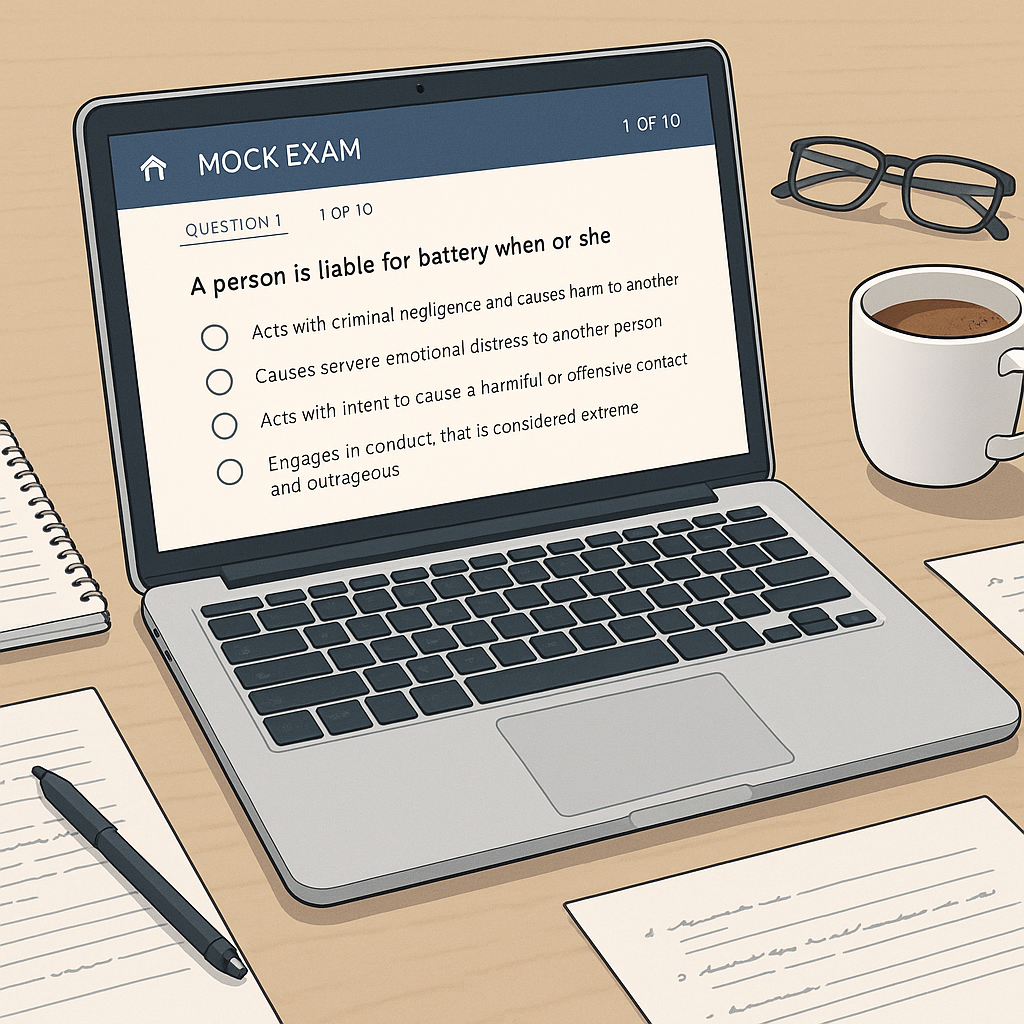
Why Passive Revision Fails
Let’s be honest: it feels productive to re-read your notes or binge-watch recorded lectures. But the truth? It’s the least effective way to prepare for SQE1. Research consistently shows that passive revision methods like highlighting, re-reading, or even summarizing don’t build long-term retention. In fact, you might remember less than you think.
SQE1 isn’t about regurgitating your notes. It’s about applying them in a high-pressure scenario — solving complex MCQs under timed conditions. You can’t fake your way through that by passively absorbing information.
What Is Active Recall?
Active recall flips the script. Instead of passively taking in information, you actively try to retrieve it from memory. Think flashcards, self-quizzing, or MCQ drills. It forces your brain to engage with the material, strengthening neural connections. This isn’t theory — studies from Potts & Shanks show that retrieval practice dramatically improves exam performance.
How Active Recall Applies to SQE1
SQE1 is all MCQs — 360 questions split between FLK1 and FLK2. Each question requires you to apply legal principles, case law, and ethics, often across multiple topics. Memorizing isn’t enough; you need to practice like you’re in the exam.
Here’s an example: say you’re revising contract law. You could re-read your LLB notes on breach of contract, or you could drill yourself with MCQs that test breach scenarios. Which one forces you to think critically? The drill.
Practical Prep Strategies
- Start Early but Small: Don’t wait until the last few weeks to cram. Begin with short, focused drills (e.g., 10 questions/day) and gradually increase volume.
- Drill by Topic: Focus on one subject at a time — say, tort law — before moving to the next. SQE1 Drills lets you configure sessions by topic, so you’re not overwhelmed.
- Simulate Exam Conditions: At least once a week, do a full timed session. SQE1 Drills’ Exam Mode replicates the SQE1 format with 180 MCQs and a timer. It’s brutal, but it works.
- Track Weak Areas: Don’t guess where you’re struggling — use analytics. Tools like SQE1 Drills highlight weak topics (e.g., scoring under 60%) so you can target your revision.
Example: Tackling Property Law
Property law is notoriously tricky because of its technical details — leases, co-ownership, easements. An SQE1 question might ask:
"Which of the following is true regarding the termination of periodic tenancies?"
If you haven’t actively practiced, you’ll freeze. But if you’ve drilled similar questions, you’ll recall that termination usually requires proper notice. SQE1 Drills doesn’t just give you the answer — its AI tutor explains the legal principle behind it and why distractor options are wrong.
Why It Works
Active recall isn’t just about getting the answer right. It’s about learning from your mistakes. Every incorrect answer is a chance to review the legal principle, understand the logic, and avoid the trap next time. That’s why SQE1 Drills focuses on instant feedback — you learn on the spot.
The Obvious Objection
You might be thinking, “Can’t I just use a generic study app or make flashcards?” Sure, but SQE1-specific tools save time. Generic apps won’t understand the SRA assessment specifications or map questions to FLK topics. And unless you’re adding 100+ new flashcards daily, you’ll run out of fresh material fast.
Final Thought
If you’re serious about passing SQE1, ditch passive revision. Active recall isn’t optional — it’s essential. Tools like SQE1 Drills aren’t magic, but they make active recall easier, faster, and more focused. And at £5/month, it’s a no-brainer.
Want to see how it works? Try 10 free MCQs here.
Ready to see SQE1Prep in action?
AI-powered SQE1 exam preparation platform with focused MCQ drills, real-time analytics, weak-topic detection, and an AI tutor — from just £5/month.
Get Started Free →