SQE1 Prep: Stop Reading, Start Practicing
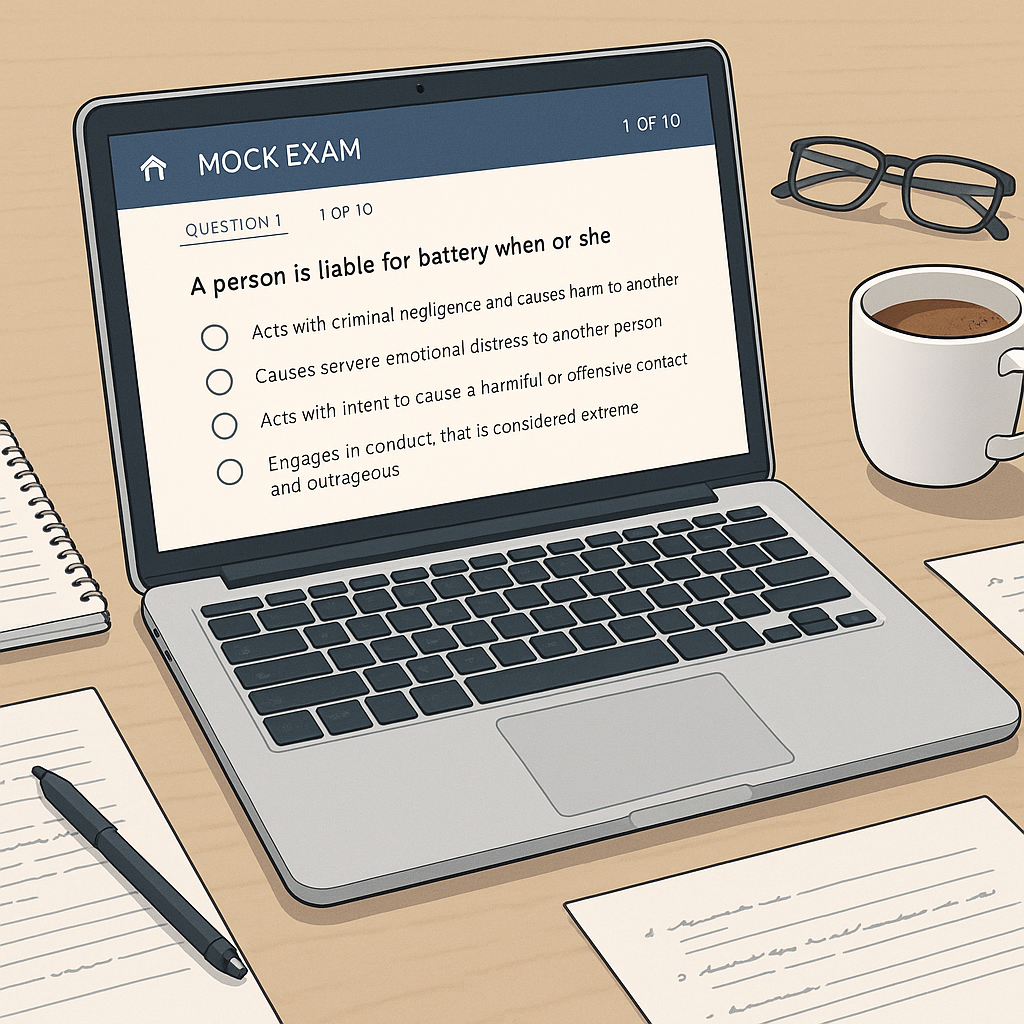
Let’s get one thing straight: the SQE1 isn’t your typical law school exam. You’re not writing essays or crafting elegant arguments. You’re answering 360 multiple-choice questions (MCQs), each designed to trip you up if you’re not razor-sharp on the details. And yet, so many candidates cling to passive study methods—highlighting textbooks, re-watching lectures, or making endless notes. Sound familiar? It doesn’t work.
Why Most Candidates Fail
The pass rate for SQE1 typically hovers around 53-56% (Law Society). That’s a coin toss. And the main reason isn’t a lack of effort—it’s a lack of effective effort. Passive learning might feel productive, but it doesn’t prepare you for the rapid-fire decision-making that the SQE1 demands.
The exam tests applied knowledge, not just theory. You’ve got to know how to use the law, not just recite it. If you’re spending most of your time reading and re-reading, you’re not building the neural pathways needed to recall and apply information under pressure.
The Science of Active Practice
Studies show that active recall—forcing your brain to retrieve information—is far more effective than passive review (Harvard EDU). It’s the same reason flashcards work better than re-reading notes. Your brain is a muscle, and like any muscle, it grows stronger when you make it work.
For the SQE1, this means drilling MCQs, reviewing why you got answers wrong, and repeating the process until you’re scoring consistently high. This is exactly why platforms like SQE1 Drills focus exclusively on active practice.
Mastering Active Practice with SQE1 Drills
So, how do you make active practice work for you? Here’s a practical approach:
-
Drill Daily: Start with small, manageable sessions—10 to 30 questions. SQE1 Drills lets you set the session length, so you can squeeze in practice even on busy days.
-
Use Instant Feedback Mode: Every time you answer a question, the platform tells you immediately if you’re right or wrong. But it doesn’t stop there. The AI tutor explains why the correct answer is correct and why the wrong options don’t work. It’s like having a mini law tutor in your pocket.
-
Target Your Weak Spots: Real-time analytics show you which topics you’re consistently scoring below 60% on. Struggling with Solicitors’ Accounts or Trusts Law? Focus your drills there until you see improvement. It’s a smarter way to study than plowing through random topics.
-
Simulate Exam Conditions: Once you feel confident, ramp it up. Use Exam Mode to simulate the real SQE1 format: 180 questions, timed. This helps you build stamina and learn to manage your time effectively—a critical skill for a six-hour exam.
The Obvious Objection: Can’t I Just Use a Book?
You might be thinking, "Why not just buy a prep book with practice questions?" Fair point. But here’s the reality: most books give you a static set of questions. Once you’ve gone through them, you’re done. No fresh material, no analytics, no feedback.
With SQE1 Drills, the question bank grows by about 100 new AI-generated questions every night. You’ll never run out of practice material. Plus, the weak-topic detection and instant explanations make it a living tool—not just a static resource.
Final Thoughts: Practice Smarter, Not Harder
The SQE1 is an expensive and high-stakes exam. At £1,934 per sitting, you don’t want to retake it if you can avoid it. Active practice isn’t just a good idea—it’s essential. Whether you’re using SQE1 Drills or another tool, make sure your prep is focused, data-driven, and interactive. Passive study won’t cut it.
Ready to start practicing smarter? Check out the free 30-day trial of SQE1 Drills and see how active recall can transform your prep strategy.
Ready to see SQE1Prep in action?
AI-powered SQE1 exam preparation platform with focused MCQ drills, real-time analytics, weak-topic detection, and an AI tutor — from just £5/month.
Get Started Free →