Why SQE1 Prep Costs Are a Problem
If you're studying for the SQE1, you've probably noticed something frustrating: the preparation options are expensive. Premium courses like BARBRI or BPP can cost you anywhere from £3,000 to £6,000. For self-funded candidates — paralegals, career changers, or international lawyers — that's not a small ask. But here's the kicker: much of what you're paying for boils down to lectures.
And here's the thing: lectures alone won't get you a passing score. SQE1 isn't about memorizing content; it's about application. The exam requires you to practice single-best-answer multiple-choice questions (MCQs) and develop the skill to apply legal principles to fact patterns. If you're not drilling, you're not learning. And if you're not learning, you're not passing. It's that simple.
So, what do you do if you can't afford a £3,000 course? You need an alternative that focuses on active learning, weak-topic identification, and exam simulation — without draining your bank account. That's where SQE1 Drills comes in.
The Weak-Topic Problem (And Why It Matters)
Most of us overestimate how well we know a topic. You might think you've nailed Contract Law because you remember key cases like Carlill v Carbolic Smoke Ball Co., but can you apply those principles to tricky, nuanced fact patterns? Probably not.
Weak topics are sneaky. They hide in plain sight. Without a structured approach, you'll naturally gravitate toward revising what you're already comfortable with — and avoid the areas that feel unfamiliar or intimidating. The result? You spend hours "studying" but make no real progress. And guess what? That's how you fail.
SQE1 Drills tackles this directly. Every time you complete a drill, the platform analyzes your performance in real-time. Say you score below 60% in Property Law: you'll know immediately, and the system will nudge you to focus on that area next. It’s like having a personal tutor who keeps you accountable.
Why Weak-Topic Detection Is Crucial
- Efficient Use of Time: Instead of wasting hours reviewing everything, you focus only on areas where you're struggling.
- Avoid Overconfidence: Weak-topic detection keeps you grounded and ensures your confidence is based on actual performance, not assumptions.
- Targeted Improvement: By repeatedly addressing weaker areas, you turn them into strengths.
How It Works
Here’s a breakdown of how SQE1 Drills operates:
1. Focused Drills
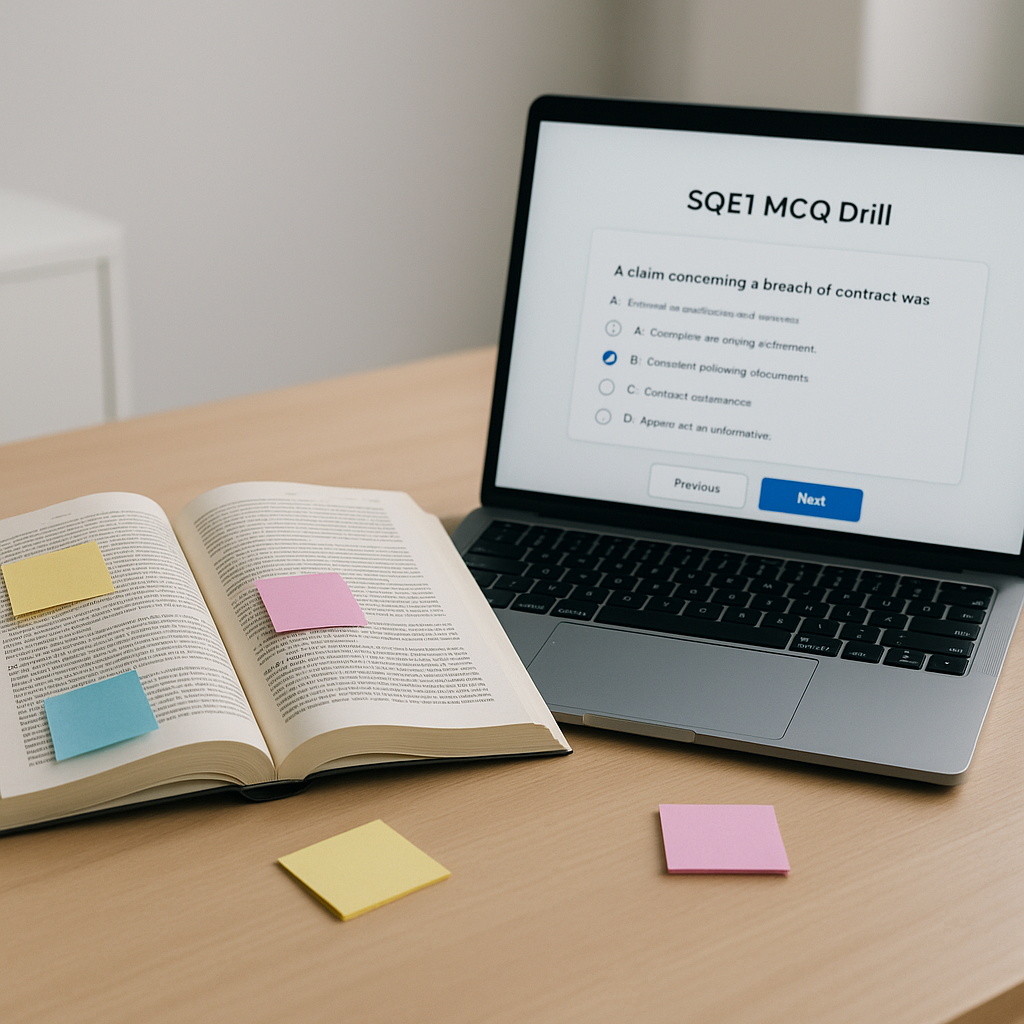
Start with a drill in any subject — say, Tort Law or Criminal Law. You can customize the number of questions to fit your schedule: 10, 30, 60, or even 90. Every question is formatted as single-best-answer MCQs, just like in the real SQE1. This ensures you're practicing in the exact format you'll encounter on exam day.
2. Real-Time Feedback
In "Instant Feedback" mode, you get explanations after answering each question. But it’s not just about telling you the right answer. SQE1 Drills also explains why the wrong answers are incorrect. This is crucial because understanding common pitfalls helps you avoid them in the future.
3. Weak-Topic Analytics
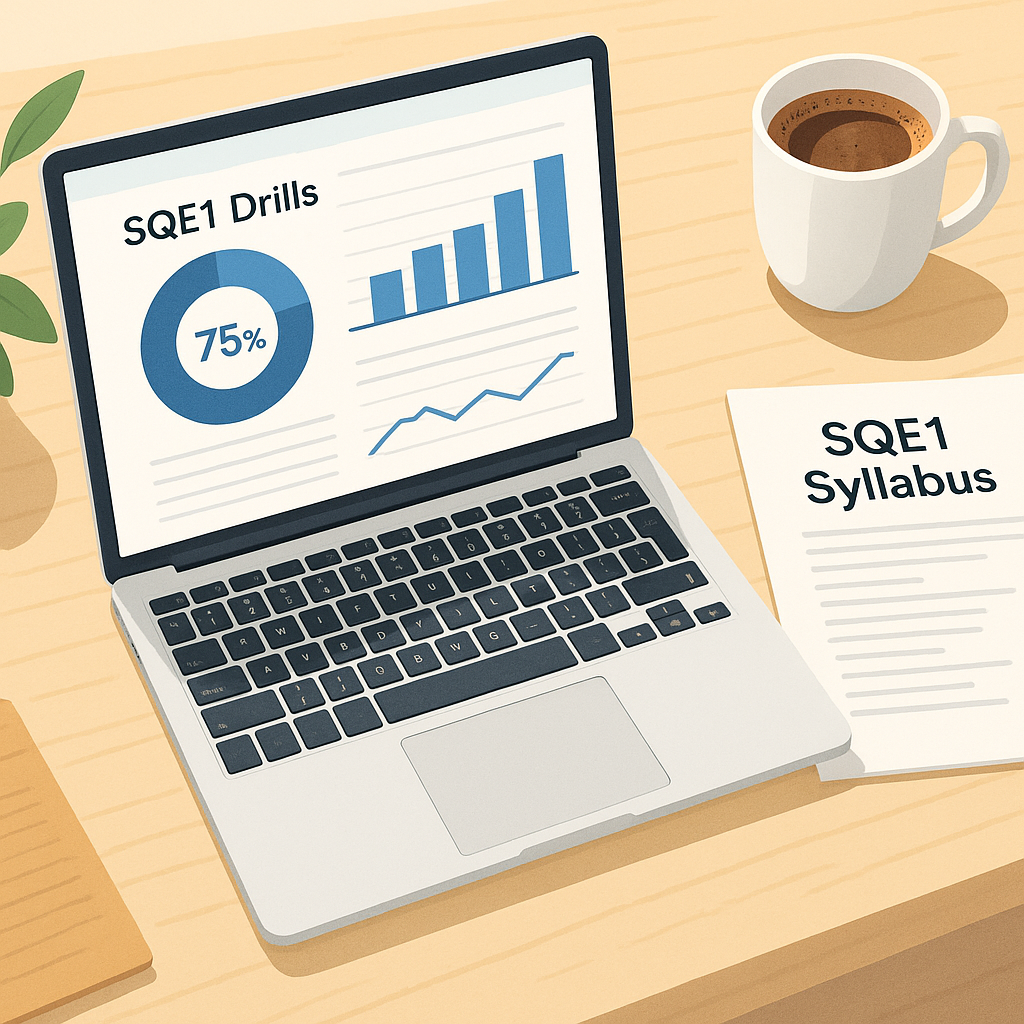
Once you complete a drill, your dashboard displays a detailed breakdown of your performance. It highlights:
- Your weakest topics
- Trends over time (e.g., whether you're improving or regressing in specific areas)
- A comparison of your performance across different subjects
For example, if your Land Law accuracy drops from 70% to 50%, the system flags it so you can address the decline before it’s too late.
4. Exam Mode
When you're ready to simulate test conditions, switch to Exam Mode. You'll get 180 questions in a timed session — just like the real SQE1. No instant feedback, no analytics until the end, and strict timing constraints. This helps you build stamina and manage your time effectively under pressure.
Why This Approach Works
- Immediate Insight: You’re not left guessing where your weaknesses lie.
- Tailored Focus: The system adapts to your needs, ensuring you're always working on the areas that matter most.
- Realistic Practice: By simulating actual exam conditions, you reduce anxiety and improve your time management skills.
Why Active Practice Beats Passive Learning
Let’s be honest: watching hours of lectures or reading textbooks feels productive, but it rarely is. The SQE1 is a test of application, not regurgitation. That’s why active recall — like answering MCQs — is scientifically proven to be the most effective study method.
The Science of Active Recall
Active recall forces your brain to retrieve information, strengthening neural connections and improving memory retention. In contrast, passive learning methods like watching videos or re-reading notes often give a false sense of progress because they don’t challenge you to apply what you’ve learned.
How SQE1 Drills Incorporates Active Recall
- Targeted MCQs: Every question maps directly to the SRA's SQE1 assessment specifications. No filler, no off-topic distractions.
- Explanation-Driven Learning: Each question comes with detailed explanations, turning mistakes into opportunities for growth.
- Dynamic Question Bank: The platform adds approximately 100 AI-generated questions daily. This ensures you always have fresh material to work with, keeping your studies relevant and engaging.
Is It Really Worth £5?
For the price of a coffee, you get unlimited drills, weak-topic analytics, a growing question bank, and an AI tutor that explains every question. Compare this to premium courses costing thousands of pounds that often rely heavily on passive learning methods.
Of course, SQE1 Drills isn’t a magic bullet. You still need discipline to show up and practice regularly. But if you’re willing to put in the work, the tools are there to make every minute of study count.
Cost Comparison Table
| Feature | SQE1 Drills (£5/month) | Premium Courses (£3,000–£6,000) |
|---|---|---|
| Unlimited MCQ Drills | ✅ | ❌ (Limited access) |
| Weak-Topic Analytics | ✅ | ❌ |
| Instant Feedback | ✅ | ✅ |
| Exam Simulation | ✅ | ✅ |
| Price (Monthly) | £5 | £250–£500 |
FAQ
Q: How often should I use SQE1 Drills?
A: Aim for at least 30 minutes a day. Consistency beats cramming every time. If you have more time, try completing a full 180-question simulation once a week as you get closer to exam day.
Q: What if I don’t know where to start?
A: Begin with a diagnostic drill. The analytics will highlight your weakest areas so you can focus on them first. This ensures your study time is as efficient as possible.
Q: Are the AI-generated questions accurate?
A: Yes. Each question is validated against the SRA’s SQE1 assessment framework to ensure it’s exam-relevant and fair. Additionally, the question bank is updated regularly to reflect changes in the assessment specifications.
Q: Can I rely solely on SQE1 Drills to pass?
A: While SQE1 Drills provides excellent active practice tools, it’s recommended to supplement with additional resources like textbooks or summary guides for foundational knowledge. Think of SQE1 Drills as your application and testing tool, not a content library.
Q: Can I cancel anytime?
A: Yes. It’s a monthly subscription, so there’s no long-term commitment. Cancel whenever you feel you’ve mastered the material.
Ready to Stop Guessing?
If you’re tired of overpriced courses and aimless study sessions, SQE1 Drills is the solution. For just £5/month, you get the tools to master your prep and pass SQE1 on your first attempt.