Do You Need SQE1 Exam Preparation Books?
If you’re prepping for the SQE1 exam, you’ve probably seen the shelves full of expensive revision guides and thick textbooks claiming to hold all the answers. They look impressive, but do they actually help? Or are they just another expense draining your already tight budget?
Books can be useful for foundational knowledge, but when it comes to preparing for this exam—the single-best-answer MCQ format—you need something more tactical. Here’s why.
The Problem With SQE1 Prep Books
Prep books are static. They give you pages of information but no feedback. You read, highlight, maybe write some notes. But how do you know if you’ve actually learned anything? Worse, how do you know where your weaknesses are?
For example, in Property Law, you might feel confident after reading a few chapters about leases and mortgages. But the real exam doesn’t ask, “Explain the difference between a freehold and a leasehold.” It asks tricky situational questions like:
“Which of the following clauses in a lease is most likely to conflict with statutory protections under the Landlord and Tenant Act 1985?”
This is where prep books fall short. They don’t simulate exam conditions. They can’t expose gaps in your knowledge or help you practice applying concepts under pressure.
Why Active Practice Beats Passive Reading
Active recall is the gold standard for exam prep. Instead of passively consuming information, you test yourself, identify mistakes, and strengthen weak areas. This approach is backed by learning science and is far more effective than passive reading.
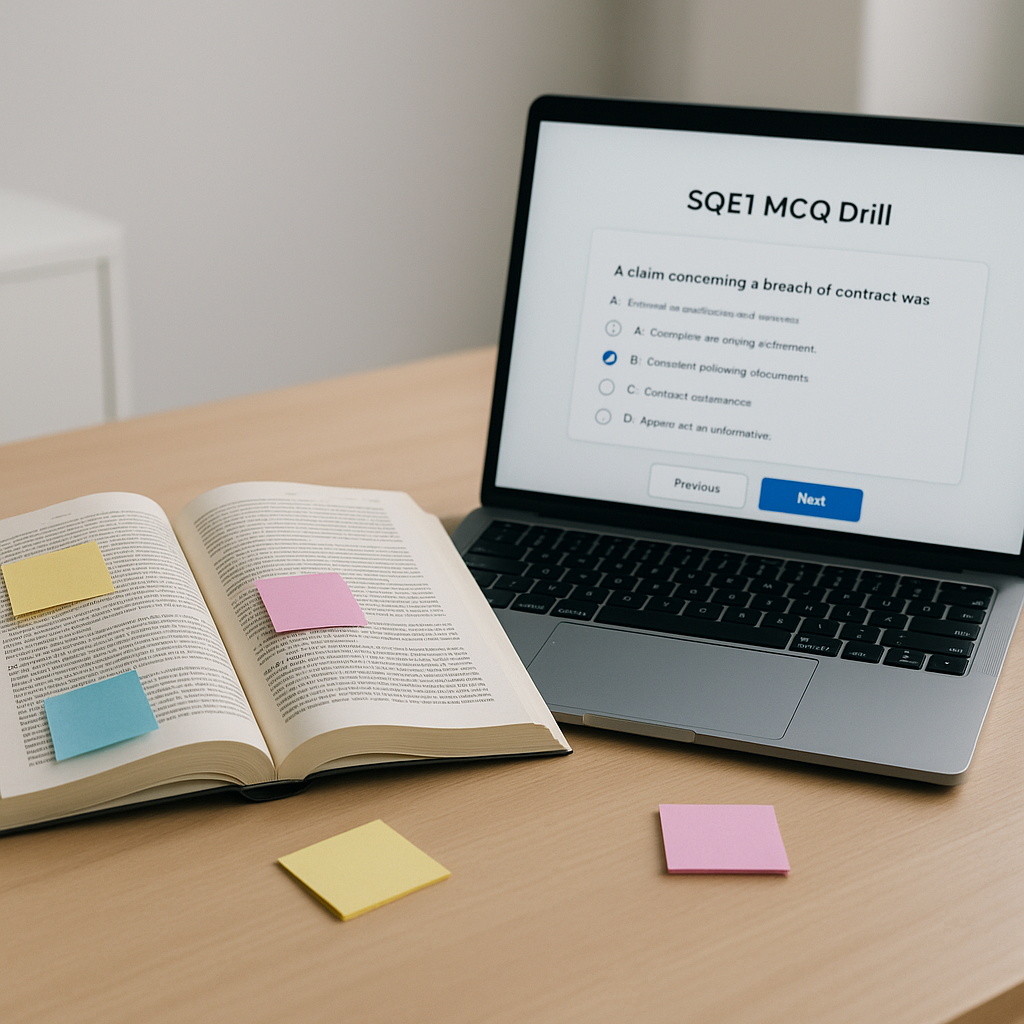
To implement active recall, you can use tools or platforms that provide SQE1-style MCQs, offer instant feedback, and help you pinpoint weak topics. For example, if you consistently struggle with Criminal Law scenarios, you’ll know exactly where to focus your efforts.
What About Revision Guides?
Revision guides are tempting because they promise to simplify everything. But their value depends entirely on how you use them. If you’re flipping through summaries without active engagement, you’re just memorizing—and memorization doesn’t guarantee a pass. SQE1 questions are designed to test understanding and application.
Instead, combine revision guides with active practice tools. For example:
- Step 1: Skim the guide for foundational concepts.
- Step 2: Test yourself with 10-30 MCQs directly related to that topic.
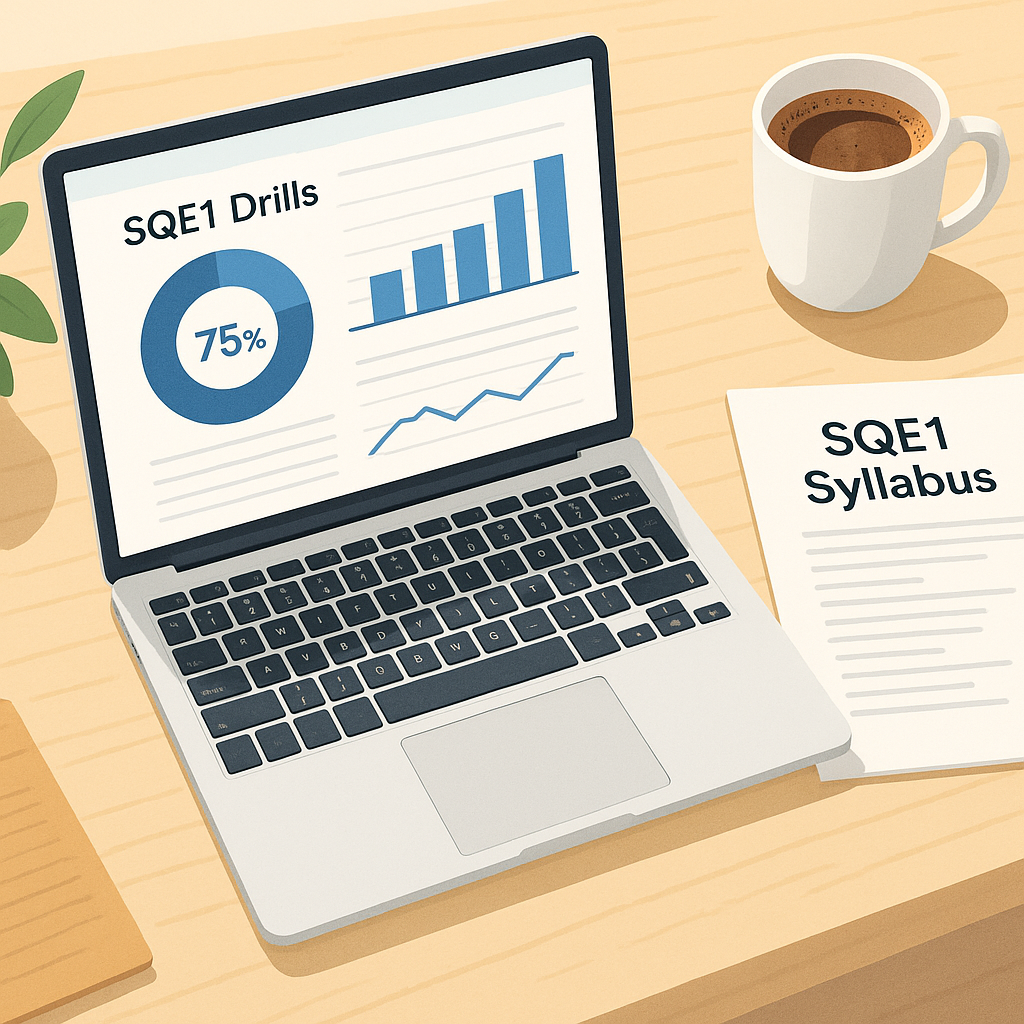
- Step 3: Review your performance to see your accuracy and time spent per question.
- Step 4: Revisit the guide ONLY for topics flagged as weak.
This hybrid method ensures you’re not just passively reading—you’re testing, refining, and building exam confidence.
Common Mistakes With SQE1 Books
- Over-reliance on passive reading: Highlighting isn’t learning. If you’re not actively recalling information, you’re not prepping effectively.
- Ignoring weak areas: Books don’t tell you what you’re bad at. That’s why tools that highlight weak topics are invaluable.
- Skipping exam simulations: The SQE1 exam is timed and stressful. If you’ve never practiced answering 180 questions in one sitting, you’re not ready.
FAQ
Q: Should I buy any SQE1 books at all?
A: Yes, but don’t go overboard. One or two solid revision guides are enough for foundational knowledge. Spend the bulk of your prep time on active practice.
Q: Can I pass without books?
A: It’s possible, but risky. Books provide structure and legal context, especially if you’re a non-law graduate. Pair them with active practice tools for complete preparation.
Q: How can I simulate exam conditions?
A: Use tools or platforms that replicate the real SQE1 format with timed questions, so you can practice managing your time effectively.
The Bottom Line
SQE1 prep books are useful, but they’re just one piece of the puzzle. You won’t pass by reading alone. Active recall, targeted practice, and exam simulations are non-negotiable. Combine books with active practice methods to maximize your chances of success.