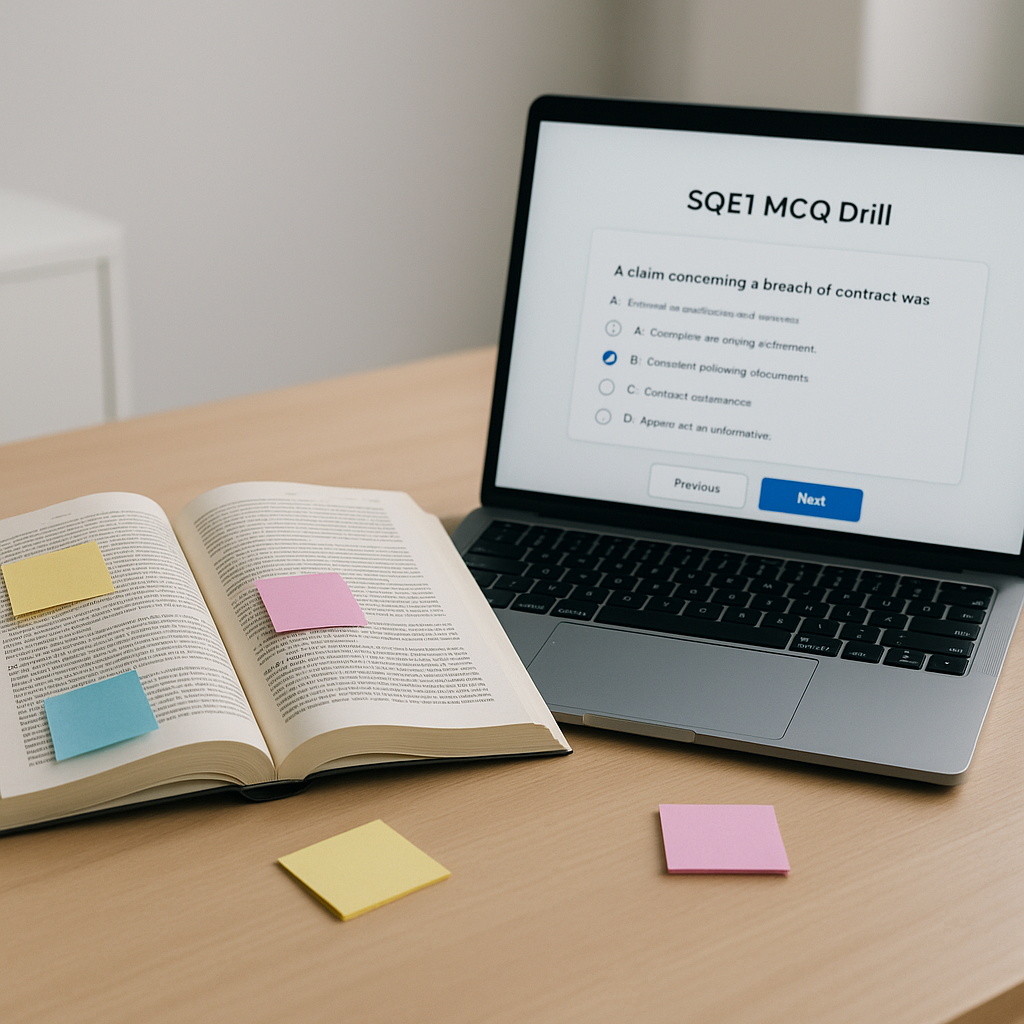
SQE1 Study Plan PDF: Build a £5/Month Strategy That Works
Preparing for SQE1 isn’t cheap. If you’ve looked into premium providers like BARBRI or ULaw, you’ve probably seen price tags north of £3,000. It’s eye-watering, especially if you’re self-funding or retaking the exam. But here’s the good news—you don’t need to spend thousands to pass SQE1.
For just £5/month, you can craft a study plan that targets your weak spots, builds consistency, and keeps you exam-ready. In this guide, we’ll show you exactly how to do it, step by step.
Why Most SQE1 Study Plans Fail
Let’s be honest: most study plans fail because they’re generic. They focus on covering the entire syllabus without accounting for your individual strengths and weaknesses. For example, spending equal time on Tort Law and Solicitors Accounts doesn’t make sense if you’re already scoring 80% in Tort Law but only 40% in Solicitors Accounts.
The SQE1 exam is brutal—53-56% pass rates, £1,934 per retake, and 360 questions split across FLK1 and FLK2. You can’t afford to waste time on what you already know. The key is identifying weak areas and drilling them until they’re strengths.
Step 1: Download the SQE1 Syllabus PDF
Before anything else, grab the official SQE1 syllabus PDF from the SRA website. This document outlines every topic tested, from Business Law to Criminal Law. Use it to map your study plan.
How to Use the Syllabus Effectively
- Break Down Subjects: Divide FLK1 and FLK2 into specific topics (e.g., Contract Law, Land Law, Ethics). Treat each topic as its own mini-module.
- Prioritize Weak Areas: Go through each topic and assess your current level of understanding. Highlight subjects where your scores or confidence tend to dip.
- Set Weekly Goals: Allocate time based on priority. Spend 60% of your study week on weak topics and 40% reinforcing stronger areas. Adjust as you progress.
By using the syllabus as your roadmap, you ensure that your study plan remains structured and comprehensive.
Step 2: Target Weak Topics with Analytics
One of the biggest mistakes in SQE1 prep is relying on passive study methods like rereading textbooks or watching lectures. These methods rarely help you pinpoint weaknesses. Instead, you need a data-driven approach.
How SQE1 Drills Helps:
- Run Drill Sessions: Focus on specific topics with 30 or 60-question drills.
- Track Performance: Use the analytics dashboard to identify weak areas (anything scoring below 60%).
- Adjust Study Focus: Shift your time and effort to flagged topics until your scores improve.
Actionable Steps
- Start Small: Run a 30-question drill on one topic (e.g., Constitutional Law). Analyze your score and pinpoint weak sub-topics.
- Review Weak Areas: Dive deeper into flagged sub-topics using textbooks, case law summaries, or online videos.
- Repeat and Improve: Drill the topic again after a week to measure improvement.
Example Workflow
Suppose your analytics show:
- Constitutional Law: 42%
- Property Law: 78%
The plan: Dedicate 4 hours this week to Constitutional Law drills, focusing on misunderstood principles like parliamentary sovereignty or judicial review. Once your score exceeds 60%, adjust focus to other weak topics.
Step 3: Build Consistent Study Habits
Cramming doesn’t work for SQE1. The sheer breadth of the syllabus makes consistent, daily practice essential for retaining knowledge and improving application skills. SQE1 Drills helps you build consistency through its streak system.
Actionable Steps for Consistency:
- Set Daily Targets: Start with 20-30 questions per day. If you’re working full-time, aim for 10-question drills and scale up as you build stamina.
- Track Your Streak: Use the streak tracker to log consecutive study days and stay motivated. For example, hitting a 7-day streak can serve as a milestone.
- Reward Progress: Celebrate small wins. Hit 30 days in a row? Treat yourself to something meaningful, like a book or a dinner out.
Consistency isn’t just about streaks—it’s about creating a routine that fits your lifestyle. Even 30 minutes a day can make a huge difference over time.
Step 4: Simulate Exam Conditions
Practicing under exam-like conditions is non-negotiable. SQE1 isn’t just about knowing the law—it’s about applying it under pressure. The exam mode on SQE1 Drills replicates the real thing, helping you prepare for the challenges of test day.
Features of Exam Mode:
- Timed Sessions: Complete 180-question papers within the actual time limits.
- Single-Best-Answer Format: Practice the same format used in SQE1.
- Keyboard Shortcuts: Learn efficient navigation techniques to save time in the real exam.
How to Use Exam Mode
- Weekly Full Mock Exams: Begin with one mock exam per week, increasing frequency as test day approaches.
- Analyze Results: Post-exam, review your answers to identify patterns in mistakes.
- Refine Strategy: Adjust your study plan based on mock exam performance.
Simulating exam conditions builds endurance, sharpens time management, and reduces anxiety.
Step 5: Track Your Progress
One of the biggest pitfalls in SQE1 prep is lack of visibility. You might feel like you’re studying hard, but are you actually improving? SQE1 Drills offers detailed performance tracking to keep you accountable.
Key Metrics to Track:
- Session Scores: Review accuracy and time spent for each drill.
- Grade Labels: Instant feedback (e.g., Outstanding = 80%+, Good Work = 60%+, Keep Practising = 40%+).
- Weekly Goal Rings: Visualize progress toward your study targets.
Actionable Steps:
- Log Weekly Progress: Use the dashboard to check your average score and accuracy.
- Identify Trends: If your accuracy dips in certain topics, adjust your focus accordingly.
- Hold Yourself Accountable: Share progress updates with a study group or mentor.
Progress tracking isn’t just about motivation—it’s a way to ensure your preparation stays on track.
Common Mistakes to Avoid
- Ignoring Weak Topics: Don’t spend time on subjects you’ve already mastered. Focus on what’s holding your score back.
- Skipping Exam Simulations: Mock exams are your best tool for building confidence under pressure.
- Inconsistent Practice: Studying once a week doesn’t cut it. Build daily habits with short, manageable drills.
- Using Outdated Resources: The SQE1 syllabus evolves. Stick to tools like SQE1 Drills that align with the latest SRA standards.
FAQ
Q: How much time should I dedicate to SQE1 prep weekly?
A: Around 10-15 hours for most working candidates. Break this into daily 1-2 hour sessions to maintain consistency.
Q: What’s the best way to target weak topics?
A: Use a tool like SQE1 Drills to systematically identify and drill weak areas.
Q: Is SQE1 Drills worth the cost?
A: Absolutely. For £5/month, you get unlimited drills, analytics, and exam simulations—far cheaper than traditional courses.
Q: How often should I simulate exam conditions?
A: Start with one mock exam per week and increase frequency leading up to test day.
Q: Can I combine SQE1 Drills with other resources?
A: Yes! Pair it with textbooks, case law summaries, and the official syllabus for comprehensive preparation.
Comparison Table: Premium Providers vs SQE1 Drills
| Feature | Premium Providers (£3,000+) | SQE1 Drills (£5/month) |
|---|---|---|
| Cost | £3,000+ | £5/month |
| Drill Analytics | Limited | Detailed |
| Exam Simulations | Included | Included |
| Flexibility | Fixed schedule | Self-paced |
| Accessibility | Restricted to course hours | 24/7 |
Ready to Build Your Plan?
If you’re struggling with SQE1 prep costs or don’t know where to start, SQE1 Drills can help. Target weak topics, track progress, and simulate exam conditions—all for just £5/month. Get started free →