Why Passive Learning Fails for SQE1
Let’s start with a hard truth: reading isn’t studying. If your SQE1 prep mostly involves highlighting textbooks or watching videos, you’re setting yourself up to fail. Don’t believe me? The SQE1 pass rate is just 53-56%, and many candidates feel blindsided despite logging hundreds of hours with their notes. Why? Because passive learning tricks your brain into thinking you’ve mastered the material when you haven’t.
Passive learning—like re-reading or summarizing—is comfortable. It feels productive because you’re “doing something.” But comfort doesn’t prepare you for 360 multiple-choice questions under timed conditions. You need active recall.
What Is Active Recall, and Why Does It Work?
Active recall means forcing your brain to retrieve information without looking at the answer first. It’s not about reading; it’s about testing. Research shows that active recall significantly improves memory retention compared to passive review. One study found that students who tested themselves remembered up to 50% more information than those who simply restudied their notes (Roediger & Butler, 2011).
Why does it work? Testing strengthens neural pathways. Every time you pull information out of your memory, you make it easier to recall next time. You’re not just learning—you’re building muscle memory for your brain.
How to Use Active Recall for SQE1
So, how do you implement active recall? Here’s a practical plan:
-
Drill Questions Daily: Start with smaller, focused question sets. For example, 10 contract law questions today, 10 criminal law tomorrow. Gradually increase the number as you build stamina.
-
Simulate Exam Conditions Weekly: Set aside time to do timed, mixed-topic drills. SQE1 Drills’ Exam Mode lets you practice 180 questions in one sitting—just like the real exam.
-
Don’t Cheat Yourself: When answering, resist the urge to peek at notes or Google. It’s better to get it wrong and learn than to fake confidence.
-
Review the Why: After each drill, review why the correct answers are right and why the distractors are wrong. SQE1 Drills’ AI tutor breaks down every question with detailed explanations.
-
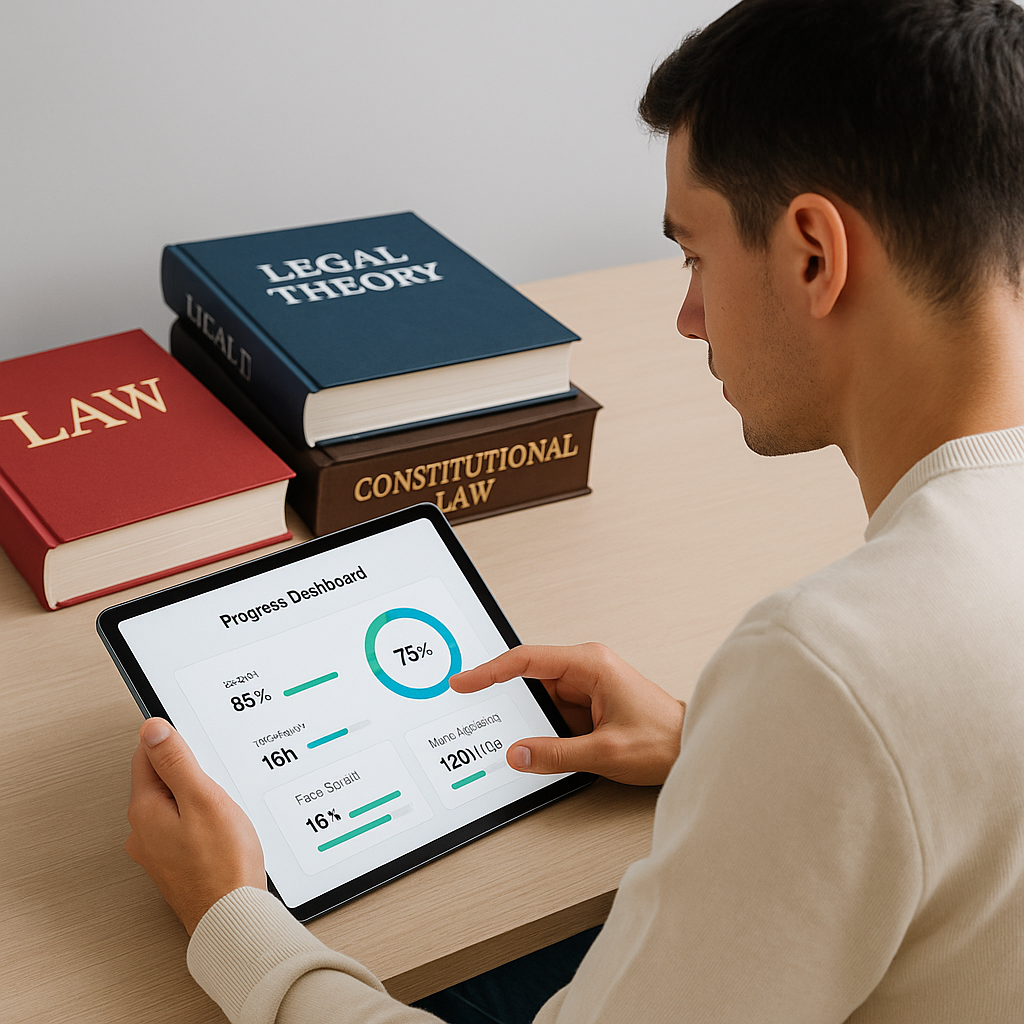
Track Your Weak Spots: Use analytics to see where you’re struggling. For example, if your accuracy in Land Law is below 60%, focus your next drills there. SQE1 Drills automatically highlights weak topics for you.
Why MCQ Drilling Is Non-Negotiable
The SQE1 exam isn’t about essay writing or open-ended discussions. It’s 360 multiple-choice questions over two days. You need to be fast and accurate.
Practicing MCQs under exam conditions teaches you how to:
- Spot common traps in question wording.
- Manage your time (180 questions in 2.5 hours isn’t forgiving).
- Build confidence in high-pressure environments.
Traditional SQE prep courses often under-deliver here. They provide lectures and materials but limited question practice. Worse, their question banks are static. Once you’ve answered everything, you’re stuck. That’s why SQE1 Drills adds ~100 new, validated questions daily. You’ll never run out of fresh material.
What About “Weak Subject” Panic?
Here’s another problem SQE candidates face: they avoid subjects they hate (or don’t understand). It’s natural. Who wants to spend hours on Solicitors’ Accounts when it feels impossible?
But avoiding weak topics is a recipe for failure. The SQE1 exam tests every subject. You can’t just “wing it” on Land Law or Wills.
This is where weak-topic detection is a game-changer. Tools like SQE1 Drills flag subjects where your accuracy is below 60%. That’s your cue to focus on those areas. It’s targeted, efficient, and far less overwhelming than trying to revise everything equally.
Final Thoughts: Don’t Just Study—Train
Preparing for SQE1 isn’t about logging hours. It’s about training your brain to perform under pressure. Active recall is the single most effective method to do that.
If you’re serious about passing, ditch the endless reading. Start testing yourself daily, track your progress ruthlessly, and double down on your weak spots. Tools like SQE1 Drills make this process simple and affordable. At £5/month, it’s a no-brainer compared to the £1,934 exam fee (and the cost of failing).
So, are you studying—or are you training? The difference might just decide whether you pass.
Ready to see SQE1Prep in action?
AI-powered SQE1 exam preparation platform with focused MCQ drills, real-time analytics, weak-topic detection, and an AI tutor — from just £5/month.
Get Started Free →