SQE1 Prep Isn’t About Memorizing Everything
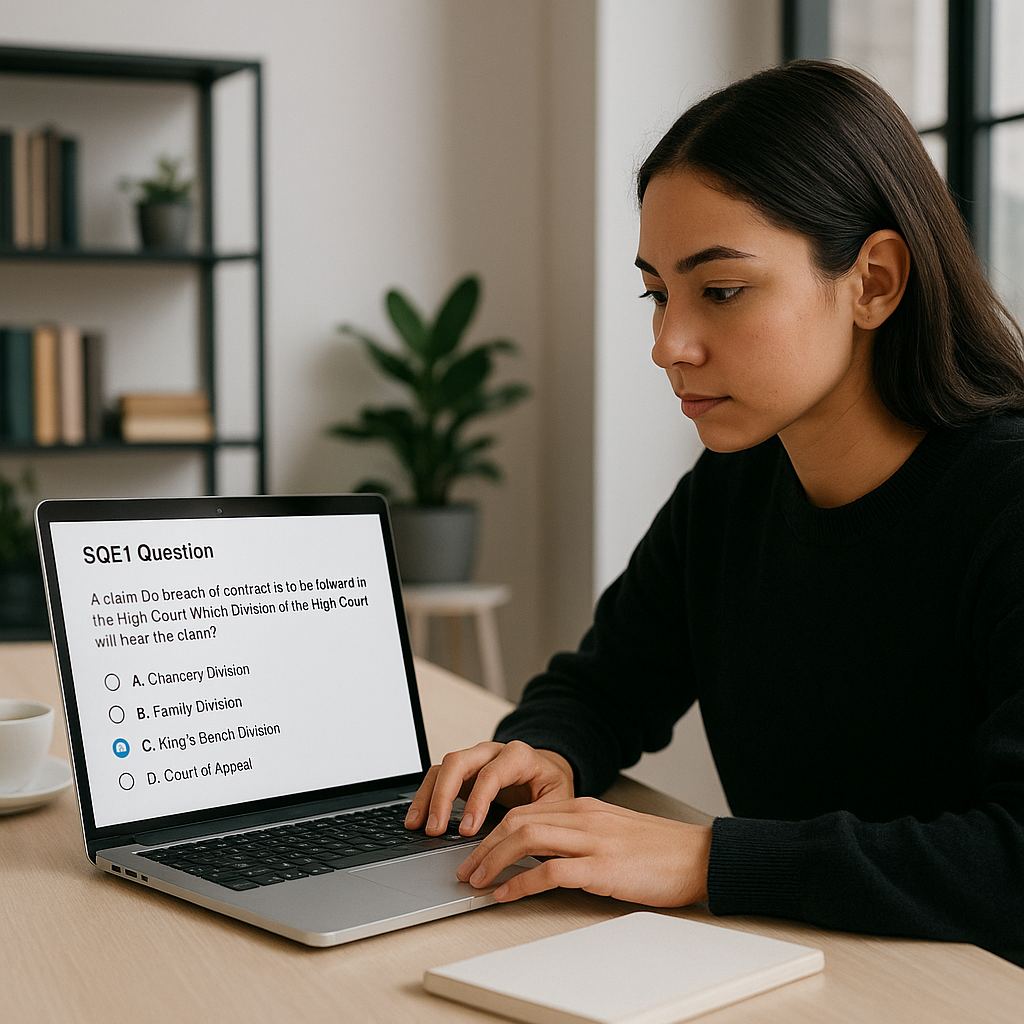
Here’s the thing about SQE1: it’s not just a test of knowledge. It’s a test of how well you know what you know — and how quickly you can apply it. The exam is 360 multiple-choice questions across two papers, each covering a ridiculous breadth of material. Think you can just rely on broad reading? Think again. Over half of candidates fail their first attempt (SRA data).
Why? Because they don’t focus their prep where it matters: their weak spots. Most people spend too much time on topics they already understand. It feels good to ace practice questions on Contract Law if you’ve nailed it before. But what about Solicitors Accounts, or those tricky Wills questions? Ignoring weaknesses is the fastest way to fail.
Weak Topics Are Your Blind Spots
You might think, “I’ve studied the syllabus. Surely I know my weak areas.” But do you? Let’s be real — it’s easy to overestimate your strengths. You skim a chapter on Tort Law, answer a few questions correctly, and assume you’re sorted. Then exam day arrives, and suddenly that obscure nuance about vicarious liability trips you up. One question becomes five, and now your confidence is shot.
This is where weak-topic detection changes the game. It’s not just about knowing you’re bad at Land Law, for example. It’s about identifying exactly which subtopics within Land Law are costing you marks. Are you struggling with easements? Adverse possession? You can’t fix what you don’t measure.
How Weak-Topic Drills Work (And Why They’re Essential)
Here’s a practical example: on platforms like SQE1 Drills, every question you answer is tracked. The system calculates your accuracy by topic — not just “Criminal Law,” but granular areas like mens rea or strict liability. If your accuracy in a subtopic drops below 60%, it flags it as a weak point. You can then set up targeted drills to focus exclusively on those areas.
Why does this matter? Because focused practice is exponentially more effective than general study. If you’re scoring 90% on Property Law MCQs, there’s no point wasting time there. But if you’re at 40% on Trusts, you need to attack it head-on. Weak-topic drills force you to confront these gaps until they’re no longer weaknesses.
The Problem with “Generic” Study Tools
You might be thinking, “Can’t I just use flashcards or a generic question bank?” Sure, but most tools don’t adapt to your performance. Flashcards treat every fact as equally important. A broad question bank might let you filter by subject, but it won’t tell you which specific subtopics are sabotaging your score.
That’s why we’re big fans of tools like SQE1 Drills. The real-time analytics show you exactly where you’re falling short. You can drill down into your weak areas, over and over, until you hit mastery. It’s like having a personal tutor who knows your weaknesses better than you do.
Don’t Just Study — Strategize
Preparing for SQE1 is a marathon, not a sprint. You can’t afford to waste time on inefficient methods. Start by taking a diagnostic test to baseline your current knowledge. Then, use weak-topic drills to systematically patch the holes. It’s not glamorous, but it works.
And remember: the goal isn’t perfection. You’re aiming for progress. Weak-topic drills help you move incrementally from “Keep Practising” (40%) to “Good Work” (60%) to “Outstanding” (80%). That’s how you pass.
Final Thought: Focus Where It Hurts
Weak-topic drilling isn’t fun. It’s uncomfortable to confront what you don’t know. But it’s also the most effective way to prepare for SQE1. If you’re serious about passing, don’t just study harder — study smarter. Start identifying your weak spots today and turn them into strengths before exam day.
Want to see how weak-topic detection works in practice? Try out SQE1 Drills for free. No credit card, no commitment. Just results.