Secured a TC at a Leading US Firm? Congrats—Now the Real Work Begins
Landing a training contract (TC) at a top US firm is no small feat. You’ve beaten fierce competition and earned a spot among the best. But let’s be real: the hardest part isn’t getting in—it’s surviving, and more importantly, thriving once you’re there.
US firms in London are notorious for their high demands. Expect long hours, complex cross-border work, and sky-high expectations. They’ve invested heavily in you, and they’ll expect a return on that investment. That return starts with nailing the Solicitors Qualifying Exam (SQE1).
Here’s the thing: SQE1 isn’t just a box-ticking exercise. It’s a marathon of legal knowledge that lays the groundwork for your TC. If you’re not prepared, you’ll feel it—both in the exam room and in your day-to-day work.
The Problem: Knowing the Law Isn’t Enough
Most candidates make a critical mistake: they assume they can coast through SQE1 by relying on lecture notes or passive study habits. Big mistake. SQE1 is designed to test applied knowledge. You’re not just recalling laws—you’re solving real-world scenarios under intense time pressure.
Let’s break this down. Imagine you’re advising a client on whether a restrictive covenant in a commercial lease is enforceable. You can’t just parrot the rule from a textbook. You’ll need to:
- Understand the legal framework governing the covenant.
- Apply that framework to the specific facts of the case.
- Consider any cross-border implications if the client operates internationally.
US firms expect you to hit the ground running. That means understanding why a clause is enforceable or how a trust works in practice—not just quoting case law. Passive learning won’t cut it. You need active recall, targeted practice, and a deep understanding of practical application.
Real-World Example
Take property law—a common weak spot for many candidates. During your TC, you might be asked to draft a lease agreement for a multinational corporation. If you don’t understand the key principles of leasehold estates or how to navigate landlord-tenant disputes, you’ll struggle. The same applies to other core subjects like contract law, tort law, and business structures. SQE1 forces you to build this foundational knowledge, but only if you prepare the right way.
The Solution: Mastering Weak Topics with Real-Time Analytics
This is where most trainees slip up. They focus on what they’re already good at, ignoring their weak spots. Why? Because it feels better to get questions right. But that’s a trap.
Why Weak Spots Matter
Think about it like this: if you’re solid in contract law but consistently struggle with solicitors’ accounts, guess what’s likely to trip you up on exam day—or during your TC? Your weak areas don’t disappear just because you avoid them. They’ll resurface, often at the worst possible time.
A Smarter Approach
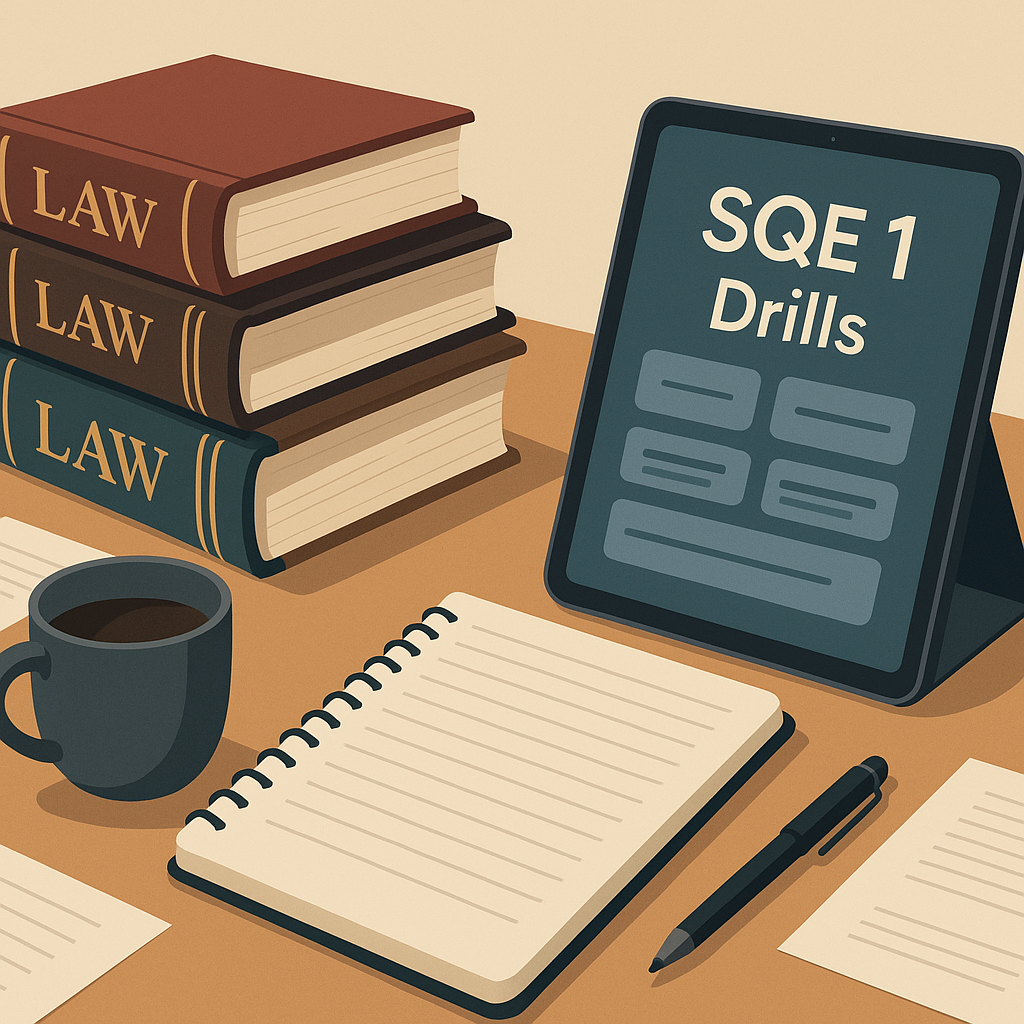
Enter tools like SQE1 Drills. These platforms use real-time analytics to identify your weakest topics and drill them relentlessly. For example:
- Struggling with Solicitors’ Accounts? The platform flags it immediately and serves up targeted practice questions.
- Accuracy below 60% in Property Law? You’ll get a tailored study plan to focus on that topic.
- Uncertain about Trusts? Interactive scenarios walk you through practical applications step-by-step.
This data-driven approach is a game-changer. By focusing your study time where it’s needed most, you’ll see faster improvement. And it’s not just about passing SQE1—it mirrors the demands of a US firm, where you’ll need to self-assess constantly and plug your knowledge gaps on the fly.
Case Study: Anna, a Successful SQE1 Candidate
Anna, a TC holder at a Magic Circle firm, struggled with wills and probate during her initial SQE1 prep. Instead of avoiding the topic, she used SQE1 Drills’ analytics to identify her weak points. Over six weeks, she improved her accuracy from 45% to 85%, ultimately scoring above average on that portion of the exam. This proactive approach not only helped her pass but also prepared her for real-world tasks during her TC.
Why Exam Simulation Matters
Let’s talk about exam conditions. SQE1 isn’t like any test you’ve taken before—180 questions in two 2.5-hour sittings is brutal. If you don’t practice under timed conditions, you’re setting yourself up to fail.
Why Time Pressure Is Crucial
The SQE1 exam format is unforgiving. You’ll need to:
- Read and analyze lengthy fact patterns.
- Identify the relevant legal principles.
- Answer single-best-answer multiple-choice questions—all within seconds per question.
Without practice, it’s easy to freeze up or burn through too much time on one question.
How to Train for Exam Day
SQE1 Drills’ Exam Mode replicates these conditions exactly. You’ll answer single-best-answer MCQs in a timed environment, complete with keyboard shortcuts for rapid answering. It’s not just practice—it’s performance training.
The Benefits
- Confidence: When you sit the real exam, it feels like just another drill. No surprises, no panic.
- Time Management Skills: You’ll learn how to pace yourself and allocate time effectively.
- Composure Under Pressure: This carries over to your TC, where grace under fire is non-negotiable.
Real Talk: Why This Matters for US Firm Trainees
Here’s the harsh truth: US firms won’t hold your hand. They expect you to be resourceful, proactive, and self-reliant. If you don’t know something, they’ll expect you to figure it out—fast.
This is exactly why structured, self-directed SQE1 prep is so crucial. It builds the habits you’ll rely on during your TC: identifying weaknesses, seeking out resources, and mastering skills independently.
A Look Ahead
During your TC, you’ll face tasks like:
- Drafting complex contracts under tight deadlines.
- Advising clients on multi-jurisdictional disputes.
- Navigating unfamiliar legal topics with minimal guidance.
The candidates who treat SQE1 as a chore often struggle in these scenarios. The ones who approach it strategically—focusing on active recall, weak-topic targeting, and exam simulation—tend to excel.
FAQs
Q: Can’t I just rely on my firm’s prep course?
A: You could, but most firm-provided prep is lecture-heavy and generic. It’s not tailored to your specific weaknesses. SQE1 Drills complements these courses with focused, personalized practice.
Q: What if I’ve already passed SQE1?
A: Great—but the habits you build during prep still matter. Use similar tools to refine your knowledge during your TC. Think of it as ongoing professional development.
Q: What if I can’t afford expensive prep tools?
A: That’s exactly why tools like SQE1 Drills exist. At just £5/month, it’s accessible for self-funding candidates. And the first 30 days are free, so there’s no risk.
Q: How much time should I dedicate to SQE1 prep?
A: Most candidates find that 15-20 hours per week over 12-16 weeks is sufficient. The key is consistency and focusing on weak areas.
Q: What happens if I fail SQE1?
A: Don’t panic. Reassess your strategy, identify what went wrong, and focus on targeted improvement. Many successful solicitors didn’t pass on their first attempt.
Comparison Table: Passive vs Active SQE1 Prep
| Aspect | Passive Prep | Active Prep |
|---|---|---|
| Study Method | Reading notes/watching lectures | Active recall, practice questions |
| Weak Spot Identification | Guesswork | Data-driven analytics |
| Exam Simulation | Rarely done | Regular timed practice |
| Real-World Application | Minimal | Emphasized through scenarios |
| Overall Effectiveness | Low | High |
Final Thoughts
Securing a TC at a leading US firm is a huge achievement. But it’s just the beginning. To meet their expectations, you need to be sharp, prepared, and adaptable.
If you’re serious about excelling in your SQE1 prep—and setting yourself up for success in your TC—give SQE1 Drills a try. It’s affordable, effective, and built for candidates like you. Get started free →