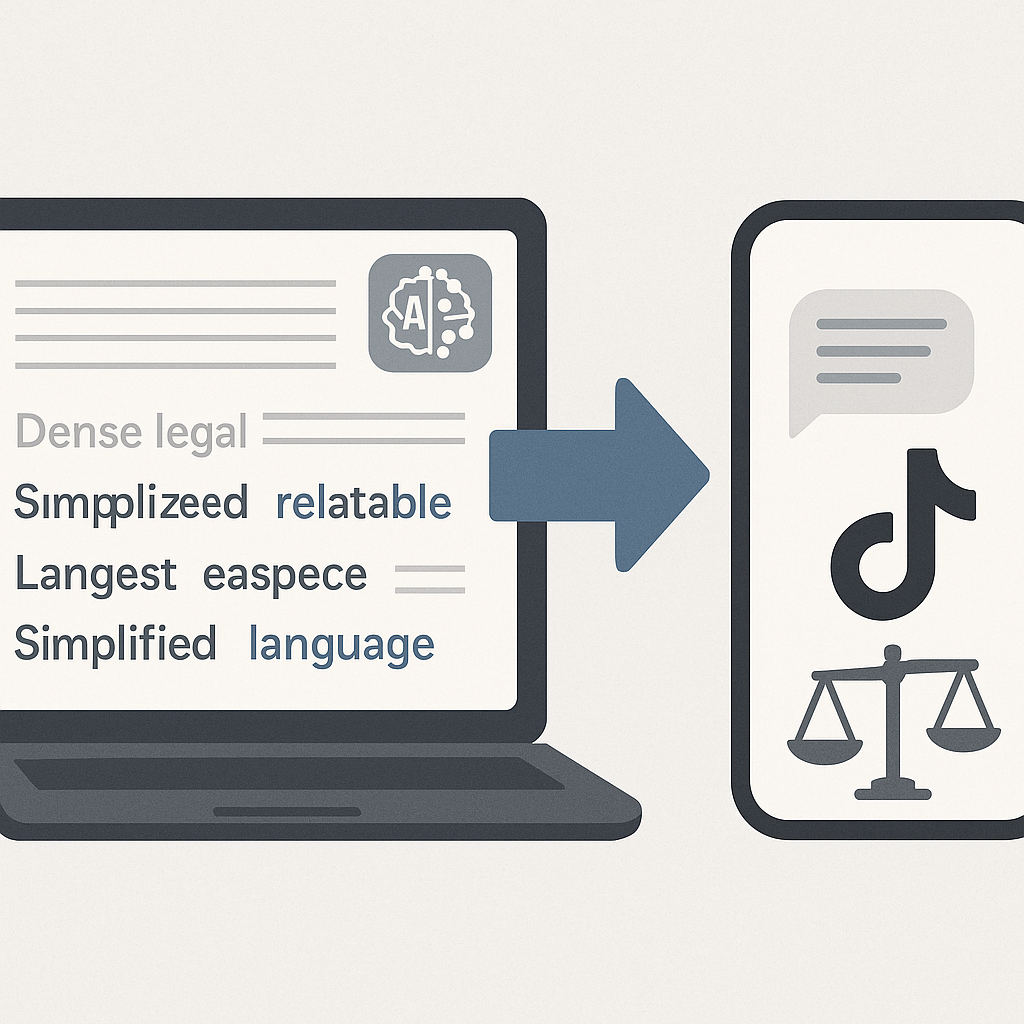
Gen Z Doesn’t Speak Legalese — And That’s a Problem
If you’ve ever tried explaining legal terms like “constructive trust” or “estoppel” to someone under 25, you know the struggle. Gen Z grew up on TikTok, memes, and short-form content — they value clarity and brevity. For law firms, this generational shift is a communication nightmare.
Legal jargon alienates clients, especially younger ones. And when your client doesn’t understand what you’re saying, trust erodes. This isn’t just an academic problem — it’s a business risk. According to Clio’s 2023 Legal Trends Report, 72% of clients say clear communication is the #1 factor in choosing a lawyer.
But what does this mean for the legal profession? And how can firms adapt to this new reality?
Why Gen Z’s Communication Style Matters
Gen Z is the first generation to grow up entirely in the digital age. They’ve been immersed in smartphones, social media, and instant messaging since childhood. This upbringing has shaped their expectations for how information should be delivered: fast, visual, and easy to understand. A 2021 survey by Pew Research Center found that 65% of Gen Z prefers learning through videos over reading long articles or documents.
For law firms, this cultural shift presents a challenge. Legal communication has traditionally been formal, verbose, and full of terms that require prior knowledge to understand. Simply put, the way lawyers speak and write is fundamentally at odds with how Gen Z consumes information. Case in point: how many 20-somethings would willingly read a 35-page legal contract without zoning out halfway through?
This mismatch isn’t just about preferences; it’s about accessibility. If Gen Z clients or trainees can’t grasp what you’re saying, they’ll disengage. And disengagement is bad for business.
Enter AI: Real Solutions for Simplifying Legal Language
Law firms are now turning to AI-powered tools to bridge this gap. These tools analyze complex legal documents and translate them into plain English, breaking the language barrier. For example, Juris.ai offers a feature that rewrites legal contracts into simplified terms while preserving their legal accuracy.
Let’s consider a practical use case: Suppose a law firm is tasked with explaining a lease agreement to a 24-year-old tenant. The legal document might use phrases like:
"The Lessee covenants and agrees to indemnify and hold harmless the Lessor against any and all claims arising out of the use of the premises."
An AI tool like Juris.ai could translate this into:
"You agree to take responsibility for any claims caused by how you use the rental property, so the landlord isn’t held liable."
This isn’t just about simplifying terms — it’s about making the explanation relatable and approachable. Gen Z values transparency and will trust a lawyer who can explain things in plain language.
AI Tools in Education
It’s not just about contracts. AI is also reshaping how firms train their future lawyers. Platforms like SQE1 Drills use AI to generate practice questions grounded in legal principles. Each question comes with an AI explanation that breaks down the legal reasoning in plain, digestible language. For example, if a trainee is studying “constructive trusts,” the platform might explain:
"A constructive trust is like when someone unfairly keeps money they shouldn’t have. The law steps in and says, ‘That belongs to someone else.’ It’s a way to fix unfair situations without formal agreements."
This approach doesn’t just prepare trainees for exams; it models how law firms should communicate with clients in real-world scenarios.
Why Law Firms Should Care
Gen Z is the future client base for every firm. They’re also the future trainees. If your firm can’t adapt to their communication style, you’ll lose them — to competitors who can.
Take the example of Magic Circle firms. Many of them now use AI analytics to track their trainees’ SQE1 prep. Analytics dashboards reveal weak topics, helping trainees focus on areas they struggle with — and every explanation provided by platforms like SQE1 Drills uses simple, direct language. Firms are seeing this as a two-fold advantage: better trainee performance and a blueprint for simplifying client communication.
Consider this: According to a 2022 report by Deloitte, 78% of Gen Z employees say they’re more likely to stay at a company that invests in training and development. By integrating AI tools into their training programs, law firms not only improve trainee outcomes but also demonstrate their commitment to innovation and adaptability.
Practical Example: Making Legalese Gen Z-Friendly
Let’s say your firm needs to explain “fiduciary duty” to a 22-year-old tech startup founder. Without AI, you might draft this:
“A fiduciary duty refers to an obligation imposed on a party who holds a position of trust and confidence towards another party, requiring the fiduciary to act in the best interests of the beneficiary.”
Confused? So would they be. AI tools can rewrite this as:
“A fiduciary duty means you’re legally required to act in someone else’s best interest — like how a financial advisor must prioritize their client’s money decisions, not their own.”
The AI-generated version is not only shorter but also uses an analogy that resonates with younger clients.
Can Simplified Language Go Too Far?
Skeptics might argue that oversimplifying legal terms risks losing nuance. They’re not wrong — but that’s where AI steps up. Tools like SQE1 Drills validate explanations against legal standards, ensuring accuracy while avoiding oversimplification. For client-facing tools, firms like Legalese Decoder use similar methods. The result? Simple language that’s still airtight legally.
A Balancing Act
To strike the right balance, law firms should:
- Use AI Tools Judiciously: Don’t replace human judgment entirely. AI should complement expertise, not replace it.
- Test Simplified Explanations: Run simplified language by colleagues or even focus groups to ensure clarity without losing critical details.
- Train Lawyers in Plain Language: Workshops on communicating effectively with non-lawyers can make a big difference.
What’s Next for Law Firms?
AI isn’t just a gimmick. It’s already transforming how firms communicate, train, and operate. But the firms that win Gen Z’s trust will be the ones that use AI thoughtfully — not just to save time, but to genuinely improve understanding.
If your firm isn’t experimenting with AI yet, you’re falling behind. And if you’re preparing for the SQE1 yourself, platforms like SQE1 Drills can show you how AI simplifies even the trickiest legal topics.
FAQ: Common Questions About Simplifying Legal Language
1. Can AI tools really replace lawyers in explaining legal terms?
No, AI tools aren’t a replacement for lawyers. They’re a supplement. Tools like Juris.ai can simplify language, but it’s up to the lawyer to ensure the explanation is accurate and addresses the client’s specific situation.
2. Is there a risk of oversimplification with AI tools?
Yes, but this risk can be mitigated by using AI tools that validate their explanations against legal standards. Always review AI-generated content to ensure it strikes the right balance between clarity and accuracy.
3. What AI tools are recommended for law firms?
Popular tools include Juris.ai for contract simplification, SQE1 Drills for training, and Legalese Decoder for translating dense legal language into plain English.
4. How can law firms train their staff to communicate better with Gen Z clients?
Consider workshops on plain language, leveraging AI tools for practice, and creating visual aids (like infographics) to accompany legal explanations.
5. Are there downsides to using AI in legal communication?
The main downside is over-reliance. AI tools can’t understand context or nuance the way humans can, so they should always be used in conjunction with a lawyer’s expertise.
Decision Framework: Should Your Firm Invest in AI Tools for Simplifying Legal Language?
| Factor | Yes | No |
|---|---|---|
| Client Demographics | Majority of clients are under 40 and value clarity | Clients are older and prefer traditional communication |
| Training Needs | Trainees struggle with legal jargon | Trainees are already comfortable with legalese |
| Budget | Firm has resources to invest in AI tools | Budget constraints limit new tech adoption |
| Firm Goals | Focus on innovation and client retention | Focus on maintaining traditional practices |
If you answered "yes" to most factors, your firm would likely benefit from adopting AI tools to simplify communication.
If you’re dealing with jargon overload, SQE1 Drills can help. Get started free →