SQE2 Pass Rates Are Up. Why Should You Care If You're Still on SQE1?
The SQE2 pass rate recently jumped to 80%, according to official SRA data. That’s a huge leap compared to the earlier years, where rates hovered closer to 60%. Great news for those tackling SQE2. But if you’re still slogging through SQE1 prep, you might be wondering: Why does this matter to me?
Here’s the short answer: SQE2 is the finish line, but SQE1 is where the real work happens. The rising SQE2 pass rates tell us something crucial about what makes candidates successful—and how those lessons can steer your SQE1 prep strategy.
Let’s break it down.
The Gap Between SQE1 and SQE2
First, let’s address the elephant in the room. SQE1 and SQE2 test completely different skill sets. SQE1 is all about knowledge—memorizing black-letter law and applying it to multiple-choice questions (MCQs). SQE2, on the other hand, focuses on practical skills like advocacy, client interviews, and drafting.
So why are SQE2 pass rates climbing when SQE1 rates remain stubbornly low (around 53–56%)?
Preparation habits. Candidates hitting SQE2 are more likely to have learned how to study effectively. They’ve figured out what works for them by the time they get there. Unfortunately, too many SQE1 candidates waste time on passive study methods—re-reading notes, watching endless lectures, or cramming case law without context. By the time they realize these methods don’t work, they’ve already failed SQE1.
Actionable Steps:
- Audit your study habits. Are you spending more time passively absorbing information (e.g., reading notes) than testing yourself? If yes, it’s time to shift toward active learning.
- Start small with MCQs. Even 20 questions a day can make a difference. Use platforms that force you to engage with the material.
- Track your progress. Keep a journal or use an app to monitor your accuracy rates over time.
Active Recall: The Game-Changer for SQE1 Success
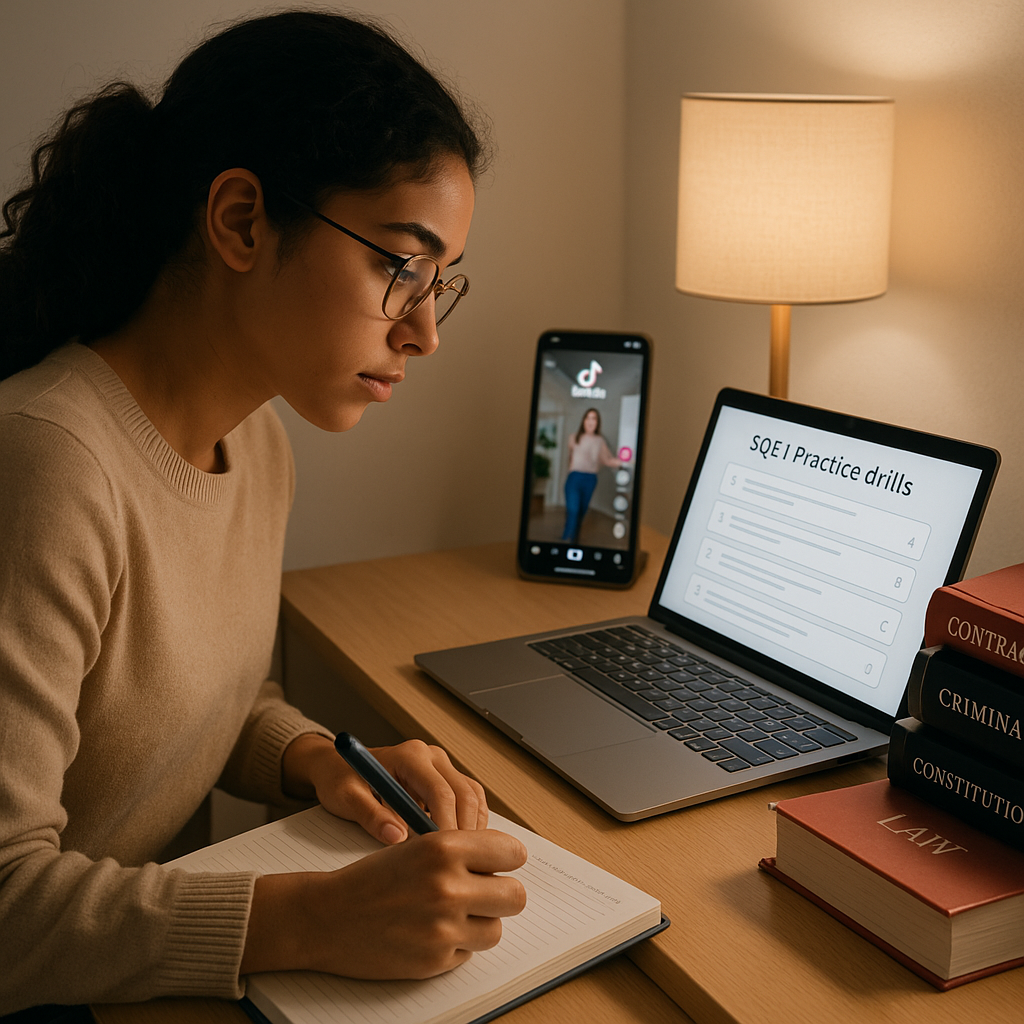
If there’s one thing SQE2 pass rates highlight, it’s the importance of active practice. That’s what SQE2 candidates focus on—mock advocacy sessions, simulated client interviews, and real-world drafting exercises. The same principle applies to SQE1, but instead of client meetings, you need targeted MCQ practice.
Why Active Recall Works
Active recall—testing yourself—is scientifically proven to beat passive study methods. A 2021 study in Psychological Science showed that students who used active recall retained 50% more information than those who just re-read their materials. That’s the difference between passing and failing SQE1.
Real-Life Example
Consider Sarah, an SQE1 candidate who failed her first attempt because she relied solely on lecture videos and handwritten notes. For her second attempt, she switched to daily MCQ drills. By testing herself every day, she not only improved her accuracy on landlord/tenant law but also finished her second exam with 30 minutes to spare. Sarah passed with ease.
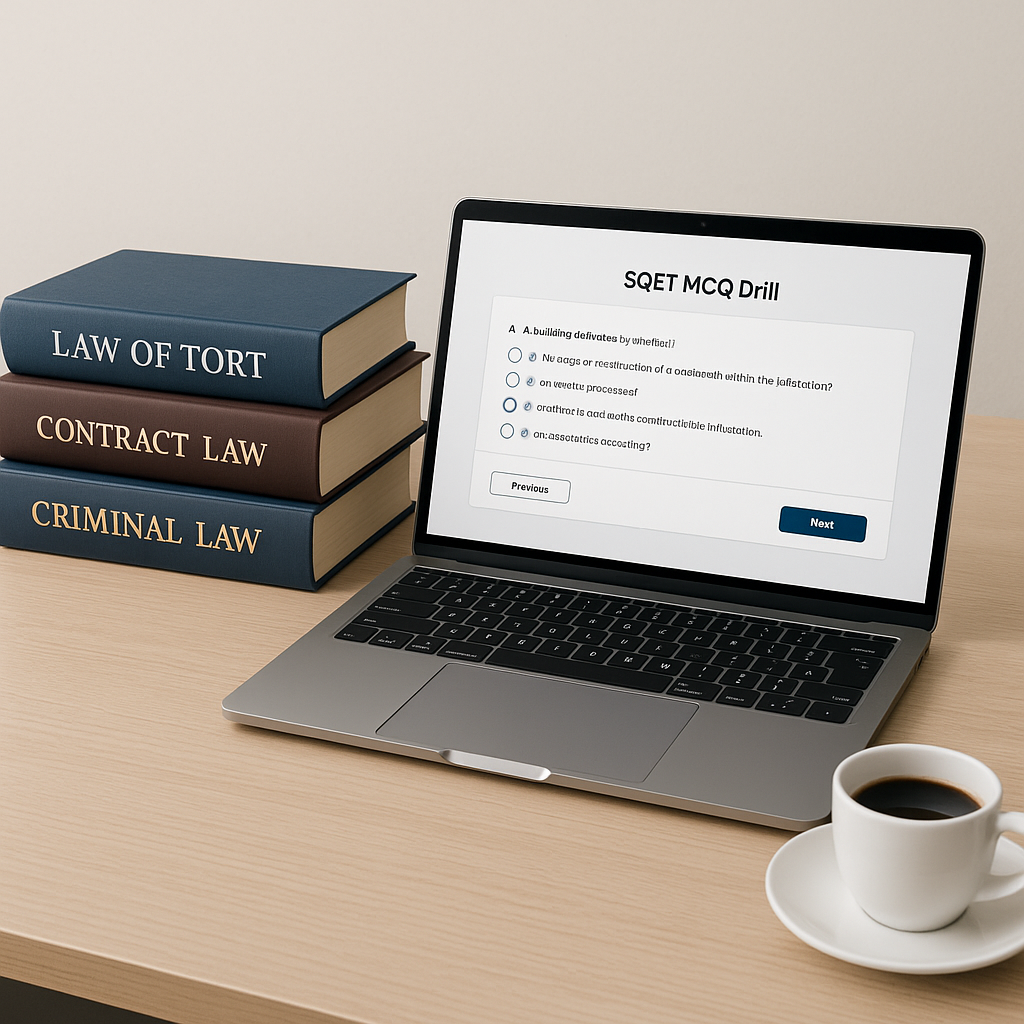
At SQE1 Drills, active recall is baked into the core of our platform. You’re not just reading about tort law; you’re answering MCQs that force you to apply it. And if you get a question wrong, our AI tutor explains why—so you learn faster.
Actionable Steps:
- Dedicate 30 minutes daily to MCQs. Break them into smaller chunks by topic.
- Review incorrect answers. Don’t just move on—understand why you got it wrong.
- Mix new and old questions. Reinforce prior knowledge while introducing fresh material.
What Rising SQE2 Rates Tell Us About Weaknesses in SQE1 Prep
Here’s another insight: SQE2 candidates are passing at higher rates because they’ve addressed their weak spots. By the time they sit SQE2, they’ve already identified and fixed gaps in their knowledge during SQE1 prep.
But most SQE1 candidates don’t do this. They study the same way for every topic, even the ones they’re already good at. That’s a waste of precious time.
Case Study
James, an SQE1 candidate, spent weeks reviewing contract law—a subject he already scored 85% on in practice tests. Meanwhile, he neglected constitutional law, where his accuracy hovered around 42%. Predictably, he failed SQE1 because he didn’t focus on his weak spots.
This is where weak-topic detection comes in. With SQE1 Drills, you can see exactly which topics you’re struggling with, based on your accuracy percentages. Scored 48% on landlord/tenant law? That’s where you focus next. Scored 78% on contract law? Move on—you’re solid there.
Actionable Steps:
- Run diagnostics regularly. Use tools or quizzes to identify weak topics.
- Prioritize your study time. Spend 70% of your time on weaker areas and 30% reinforcing strengths.
- Rotate topics weekly. Avoid burnout and ensure balanced coverage.
Time Management: The Silent Killer of SQE1 Pass Rates
One thing SQE2 candidates have mastered by necessity is time management. SQE2 exams are grueling, with back-to-back practical assessments that leave no room for delays.
But SQE1 candidates often underestimate the importance of timing. The MCQs are timed, and you’ve got to answer 180 questions in each paper. That’s less than 2 minutes per question. If you’re not practicing under timed conditions, you’re setting yourself up for failure.
Actionable Steps:
- Simulate real exam conditions. Set a timer for 2 hours and tackle 90 MCQs in one sitting.
- Track your pacing. Note how long you spend on each question and aim to reduce it.
- Skip and return. Don’t get stuck—flag difficult questions and revisit them later.
Fresh Questions Matter More Than You Think
Another reason SQE2 pass rates are up? Candidates have better access to realistic practice materials. Mock client meetings and drafting exercises mirror what they’ll face in the real exam.
For SQE1, the equivalent is fresh, high-quality MCQs. But many candidates complain that traditional question banks are too limited. You do a few drills, and suddenly you’re seeing the same questions over and over. That’s not helpful.
How SQE1 Drills Solves This
This is why we built SQE1 Drills to add 100 new MCQs to our question bank every night. These aren’t recycled. They’re AI-generated and validated to match SRA specifications. You’ll never run out of fresh material, which keeps your brain engaged and prevents over-familiarity.
FAQ: Common Questions About SQE1 Prep
1. How much time should I dedicate to SQE1 prep per week?
Aim for 15–20 hours per week, with at least 5 hours focused on active MCQ testing.
2. What’s the best way to manage multiple topics?
Use a rotation system. Focus on 2–3 topics per week, alternating between weak and strong areas.
3. Are paid platforms worth it?
Yes, if they offer fresh, high-quality questions and actionable analytics. Free resources often lack the depth needed for SQE success.
4. How many MCQs should I complete before sitting SQE1?
Aim for at least 2,000 questions—this gives you enough exposure to different question types and difficulty levels.
5. Should I study alone or join a group?
It depends on your learning style. Study groups can help with accountability, but solo prep allows for more focused, personalized study time.
Comparison Table: SQE1 Prep Strategies
| Strategy | Pros | Cons |
|---|---|---|
| Active Recall (MCQs) | Retention improves sharply | Requires consistent effort |
| Passive Reading | Easy to start | Low retention; inefficient |
| Timed Practice Exams | Builds pacing and confidence | Can feel overwhelming at first |
| Weak-Topic Detection | Maximizes study efficiency | Needs diagnostic tools |
| Study Groups | Accountability and peer support | Risk of distraction or off-topic chats |
What’s Your Takeaway?
The rising SQE2 pass rates should give you hope. They show that with the right preparation, success is absolutely achievable. But the key is to learn from SQE2 candidates’ habits:
- Focus on active recall. Swap passive textbook reading for daily MCQ drills.
- Identify weak spots early. Don’t waste time on topics you’ve already mastered.
- Practice under timed conditions. Exam pacing is a skill you need to develop.
- Keep your material fresh. Don’t rely on outdated or limited question banks.
If you start building these habits now, you’ll not only pass SQE1—you’ll be setting yourself up for an easier path through SQE2.
Ready to Build Better Study Habits?
SQE1 Drills was designed for candidates like you—self-funding, busy, and determined to pass. With unlimited MCQ practice, real-time weak-topic tracking, and exam simulations, it’s the smartest way to prep for SQE1. And it starts at just £5/month.