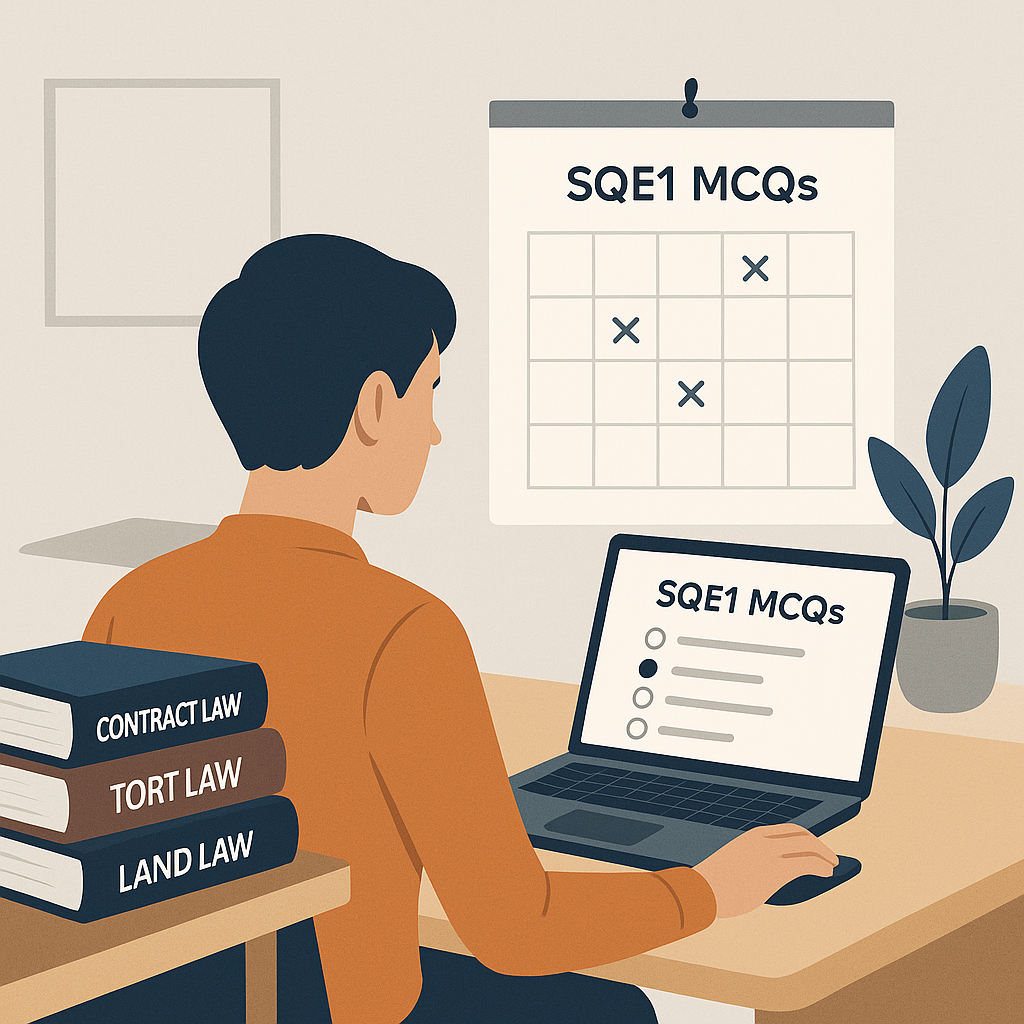
SQE1 Prep Isn't About Knowing Everything
Here's the mistake so many aspiring solicitors make: they treat the SQE1 like a general knowledge test. It's not. The SQE1 is broad, yes, but it's also brutally specific. You could know 90% of the law and still fail because that missing 10%? It's where they love to test you.
So what’s the better approach? Focus on your weak areas. The SQE1 isn't about being perfect; it's about being solid across the board. This is where weak-topic analysis saves you.
What Is Weak-Topic Analysis?
Let’s get practical. Weak-topic analysis means identifying exactly which areas of the SQE1 syllabus you struggle with. Not just guessing. Not assuming. Actually knowing.
For example, maybe you think you’re great at Contract Law. But when you attempt multiple-choice questions (MCQs), you realize you're consistently tripping up on misrepresentation. That's the kind of insight you need.
And here’s why it matters: the SQE1 has no weighted marking. A question on trusts counts the same as a question on criminal law. You can’t afford weak spots.
How To Spot Your Weak Areas
You’ve probably tried one of these methods:
- Self-testing with textbooks: Effective, but slow. And let’s be honest — it’s hard to stay consistent.
- Taking one big mock exam: Useful for benchmarking, but it doesn’t tell you why you got a question wrong.
Here’s where AI-driven tools like SQE1Prep come in handy. When you complete a set of MCQs, the platform doesn’t just score you. It breaks down your performance by topic. For example, you might see you’re scoring 85% in Tort but only 55% in Land Law. Even better? It drills deeper, showing you specific subtopics (e.g., “easements”) where you’re struggling.
This kind of precision saves you hours. Instead of passively rereading notes on everything, you can laser-focus on the gaps.
But What If You're 'Bad At Everything'?
I hear this a lot: "What if all topics feel like weak topics?" This usually means one of two things:
- You’re new to the material: If you’ve just started studying, it’s normal to feel overwhelmed. But don’t panic. Start broad, and let weak-topic analysis guide you as you progress.
- Your study method isn’t working: If you’ve been at it for months and still feel lost, you need to change how you’re studying. Reading the same textbook chapters over and over isn’t going to cut it. Practice questions and feedback are much more effective.
Stop Avoiding Your Weak Spots
No one likes tackling the topics they hate. I get it. Land Law bored me to tears too. But avoiding your problem areas is the fastest way to fail the SQE1. The exam doesn’t care what you like. It’ll test you on everything.
Here’s a strategy that works:
- Start each study session with 10 MCQs from your weakest topic.
- Review every wrong answer immediately. Don’t just memorize the right one — figure out why you got it wrong.
- End your session with a topic you’re confident in. It keeps your morale up.
With a tool like SQE1Prep, this process becomes automatic. The platform suggests what to tackle next based on your performance. It’s like having a personal coach — one that doesn’t let you off the hook.
Final Thought: Work Smarter, Not Longer
You might be thinking, "Can’t I just study everything equally?" Sure, if you have unlimited time. But most of us don’t. Weak-topic analysis isn’t about cutting corners; it’s about using your time wisely. Every hour you spend shoring up a weak spot is an hour closer to passing the SQE1.
So stop guessing. Start analyzing. And don’t leave your preparation to chance.
Ready to see SQE1Prep in action?
AI-powered SQE1 exam preparation platform with focused MCQ drills, real-time analytics, weak-topic detection, and an AI tutor — from just £5/month.
Get Started Free →