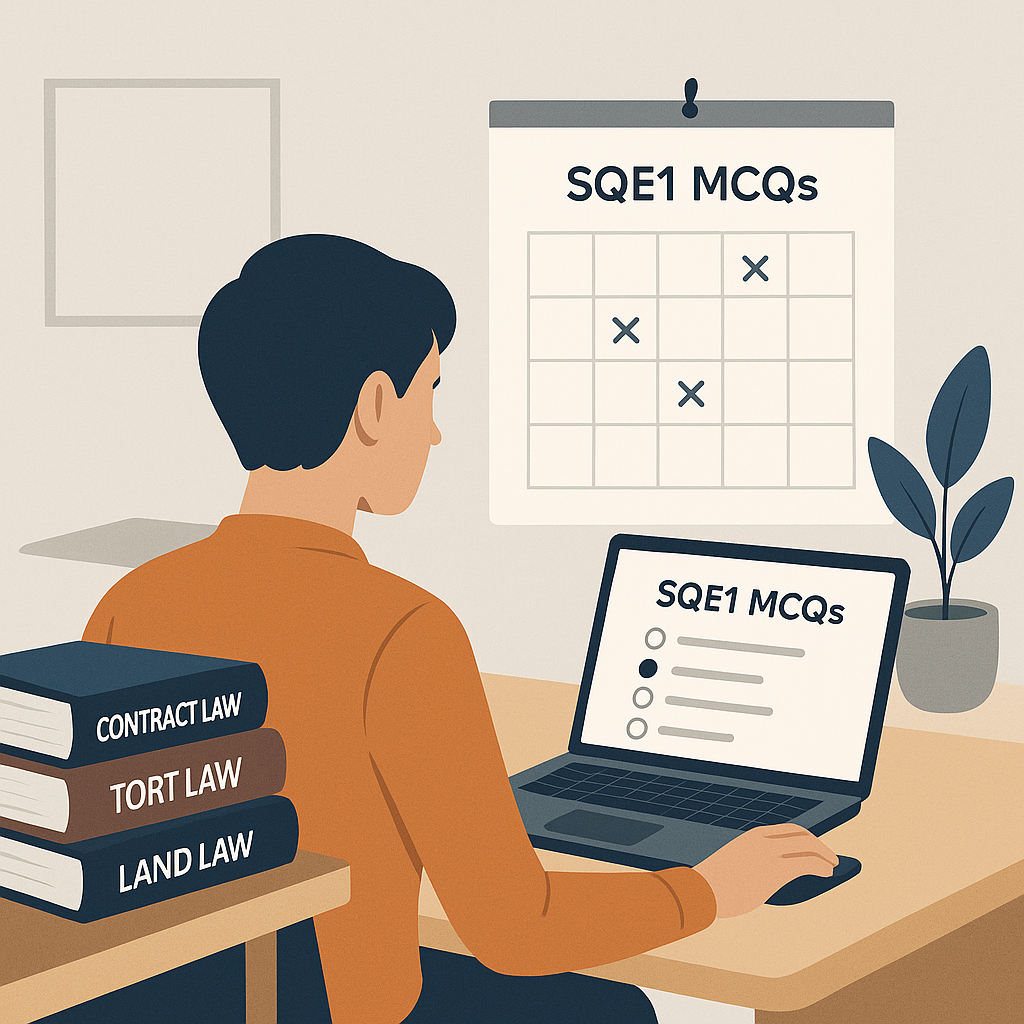
SQE1 isn’t just another law exam. It’s a grueling test of endurance, covering 360 multiple-choice questions across two papers. The pass rate hovers around 53-56% — which tells you something: most people aren’t prepared.
Here’s the hard truth: reading textbooks and attending lectures won’t cut it. Why? Because passive learning isn’t enough for an exam that demands rapid recall of legal principles under pressure. You don’t have time to second-guess yourself mid-exam.
The Biggest Mistake Candidates Make
Most aspiring solicitors spend months reviewing the syllabus. They’ll focus on the areas they already feel comfortable with — re-reading notes, summarizing cases, and maybe even highlighting textbooks. Sound familiar? But here’s the problem: familiarity is not mastery.
Real readiness comes from identifying — and attacking — your weakest topics. Those gaps in your knowledge? That’s what will sink you on exam day.
Why Weak-Topic Drills Matter
Let’s say you struggle with Solicitors’ Accounts or Land Law. Not exactly the most exciting subjects, right? But ignoring them won't make them go away. In fact, the SQE1 is specifically designed to test across the breadth of the syllabus. You can’t afford weak spots.
Weak-topic drills are an absolute game-changer. (No, this isn’t just another buzzword.) They’re simple, focused drills targeting the areas where you score poorly. For example, if you consistently bomb questions on Trusts Law, you dive into 30-question sessions on that topic until your accuracy improves. It’s about repetition, feedback, and progress.
Our platform, SQE1 Drills, does this automatically. It tracks your performance in real time and flags topics where you’re scoring below 60%. Then, it serves up focused MCQs to help you turn weaknesses into strengths. It’s like having a personal tutor who never gets tired of asking questions.
Active Recall Beats Passive Learning
The science is clear: active recall — testing yourself on what you know — is far more effective than passive review. Drilling forces you to retrieve information, reinforcing neural pathways and improving long-term retention.
Take Property Law, for example. You might think you understand restrictive covenants after reading your notes. But when faced with a scenario-based question, you freeze. Drilling real exam-style questions is the only way to simulate that pressure and build confidence.
Simulating Exam Conditions
Another mistake? Not practicing under timed conditions. The SQE1 gives you just 2.5 minutes per question. That’s not much time to analyze complex fact patterns and pick the best answer.
Our Exam Mode replicates this exact pressure. You sit a timed session of 180 questions, just like the real thing. No shortcuts, no pausing. You’ll know exactly how it feels to perform under exam conditions — and where you need to speed up.
You Might Be Thinking...
“But I can’t afford to waste time on drilling when I’ve got so much to review.” Here’s the thing: drilling isn’t a waste of time. It’s the most efficient way to study. Instead of passively consuming information, you’re actively engaging with it. That means less time studying, more time retaining.
And let’s be real — isn’t it better to find out now that you’re weak in Criminal Law than on exam day when it’s too late?
The Bottom Line
If you’re serious about passing the SQE1, stop guessing and start drilling. Identify your weak topics. Target them ruthlessly. Simulate exam conditions. And don’t rely on passive learning to carry you through — it won’t.
Want to see how weak-topic drills work in action? Try SQE1 Drills for free. You get 10 free questions without even signing up. Start there. It might just change how you prepare.
Ready to see SQE1Prep in action?
AI-powered SQE1 exam preparation platform with focused MCQ drills, real-time analytics, weak-topic detection, and an AI tutor — from just £5/month.
Get Started Free →