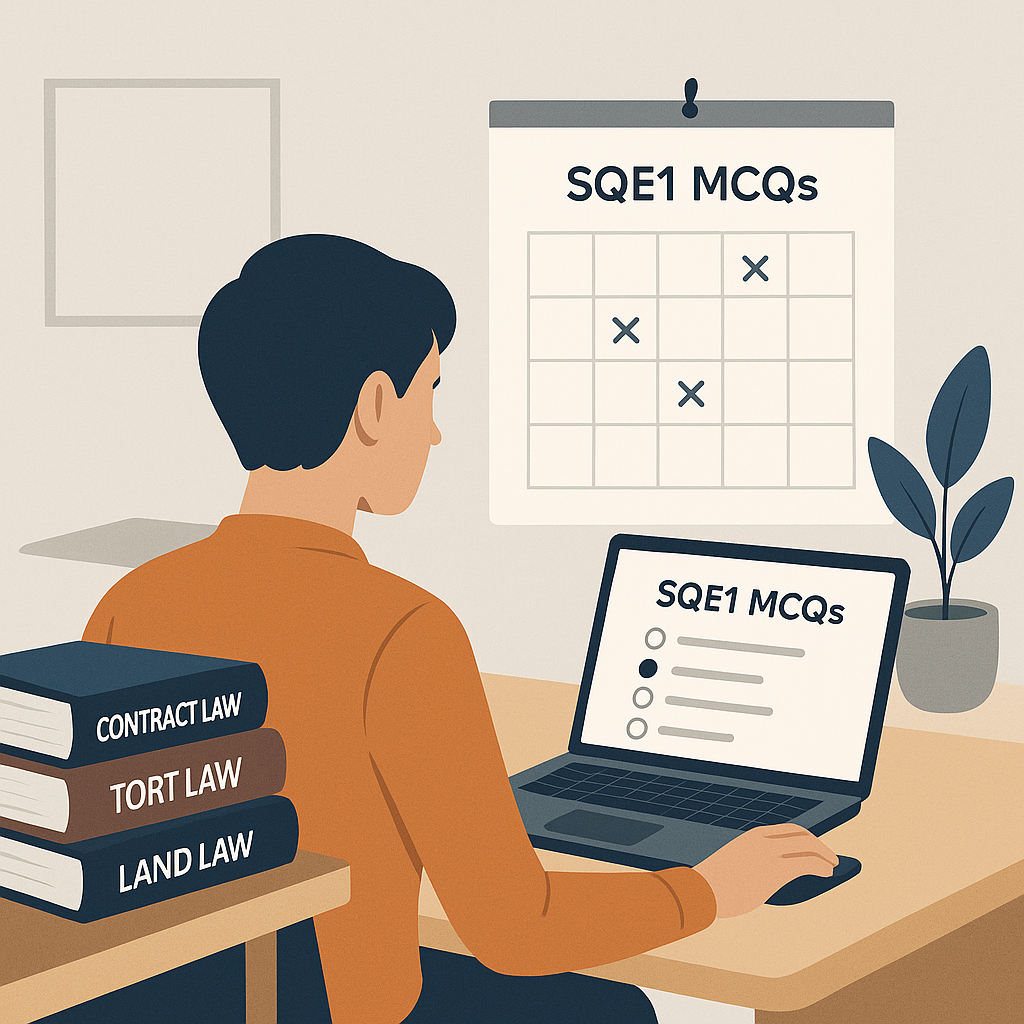
SQE1 Exam Prep: It's Not Just About Studying
You’ve probably heard this before — studying for SQE1 is like trying to drink from a firehose. The syllabus is massive. And sure, you can read every textbook, attend workshops, and make color-coded notes. But none of that guarantees you'll pass.
Why? Because SQE1 is MCQ-based. It's not testing your ability to recite legal theory; it’s testing your ability to apply it in real-world scenarios. If you’re guessing on too many questions, you’re in trouble. Weak topics are usually the culprit.
How Weak Topics Sabotage Your Score
Let’s say you feel confident about criminal law but shaky on contract law. On exam day, you’ll face 45+ contract-related questions. Guessing on even 20% of those could mean losing 9–10 marks. And that’s just one subject. Multiply that across multiple topics, and you’re staring at a failing score.
Weak-topic identification is critical. But here’s the problem: most prep methods don’t help you spot your blind spots quickly. You might not even realize you’re bad at a topic until you bomb a timed mock test.
Fixing the Problem: Targeted Drills
This is where focused drills can save your prep. Instead of practicing random questions, you zero in on your weakest topics. SQE1Prep, for example, lets you drill specifically by topic, with real-time analytics showing your accuracy rate. Got a 60% accuracy in tort law? That’s a red flag — you need to work on it before exam day.
Here’s how it works:
- You take a diagnostic test or start practicing MCQs.
- The system flags areas where your accuracy drops below a threshold (say, 70%).
- You drill those specific areas until your accuracy improves.
It’s not magic, it’s math — and it works. Aspiring solicitors using targeted drills often see their weak-topic performance jump by 20–30% within weeks.
What About Timed Practice?
You might be thinking, “Why not just do full mock exams?” Those are essential, but they don’t replace targeted drills. Mock exams show you the big picture but don’t give you enough data on why you’re losing marks. Are you struggling with legal ethics? Or is it procedural law?
Drills fill that gap. They’re granular enough to pinpoint specific weaknesses, and they don’t require a three-hour commitment like mock tests do. You can fit them into short study sessions, even during lunch breaks.
Common Objections
“But isn’t drilling repetitive?” Sure, it can feel that way. But repetition is how you build mastery. Studies show that active recall — like answering MCQs repeatedly — boosts learning retention by up to 50% compared to passive methods like re-reading Source: ScienceDirect.
Another concern might be overloading yourself with too many drills. The trick is balance. Focus on weak topics for 30–40% of your study time, then rotate in mock exams and broader reviews.
Final Thoughts
SQE1 is tough, but it’s not impossible. The key is smart prep — identifying your weak areas early and drilling them until they’re no longer weak. Tools like SQE1Prep make this easier, but the principle applies across any prep method. Weak-topic drills aren’t optional; they’re essential.
So, are you ready to stop guessing and start mastering? Your score depends on it.
Ready to see SQE1Prep in action?
AI-powered SQE1 exam preparation platform with focused MCQ drills, real-time analytics, weak-topic detection, and an AI tutor — from just £5/month.
Get Started Free →