Why Time Management Matters for SQE1
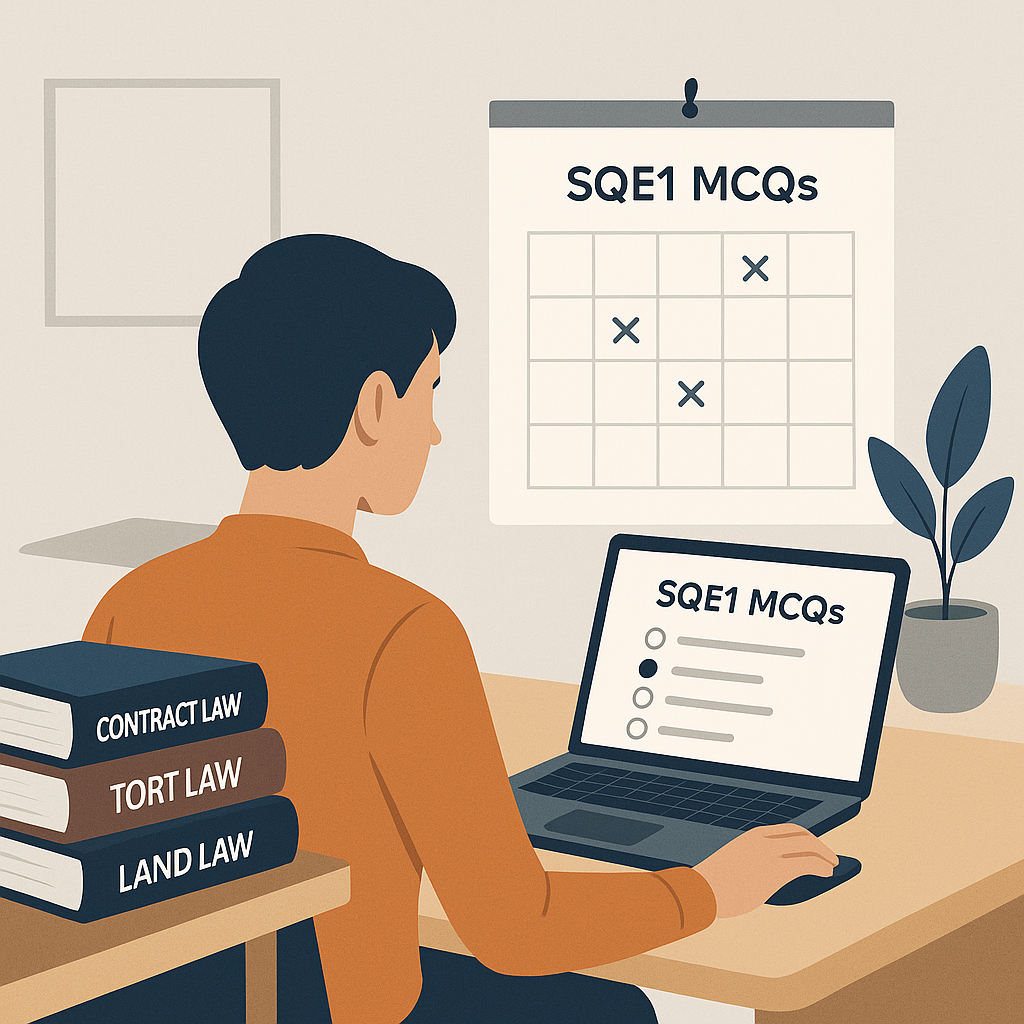
The SQE1 exam is a beast. Two papers, 180 questions each, and a huge range of topics—criminal law, contract law, constitutional law, and more. It’s not just about knowing the material. It’s about managing your time well enough to actually get through it all.
We’ve seen candidates spend 10+ hours a week revising, only to burn out or get stuck on the wrong topics. That’s not sustainable. What’s worse? It doesn’t guarantee results.
Let’s fix that.
1. Focus on Weak Topics First
We all have areas we’re bad at. Maybe you freeze on Tort scenarios or struggle with Business Law calculations. The temptation is to avoid them—who wants to feel clueless during revision? But ignoring weak areas is a mistake.
Here’s what works: identify your weak spots early and target them aggressively. Spend the first 30 minutes of every study session drilling those topics until you start seeing improvement.
How SQE1Prep helps: The platform’s Weak-topic analysis does this for you. After a drill session, it flags areas where you’re scoring below average. No guesswork. You’ll know exactly what to fix.
2. Don’t Overdo Practice Tests
Mock exams are useful but exhausting. Doing one every day won’t help you (trust me, I’ve seen candidates crash this way). Limit timed mocks to once or twice a week.
The rest of your time? Focus on bite-sized drills. Answering 20-30 questions per session keeps your brain sharp without draining your energy.
3. Use AI to Save Time
This might sound gimmicky, but AI tools are a game-changer for SQE1 prep. Why? Because they automate the boring stuff. Instead of flipping through textbooks or Googling random questions, platforms like SQE1Prep generate focused MCQs for every topic.
You’ll spend less time planning and more time practicing. One drill, one click—done.
4. Create a Strict Study Schedule
“Study whenever you have time” sounds reasonable, but it’s a trap. Without a plan, you’ll procrastinate or end up wasting time on easy topics.
Build a schedule instead. Block specific hours for revision and stick to them like you would a work shift. If mornings work better for you, start there. If evenings are quieter, lock that in.
5. Don’t Ignore Breaks
Burnout is real. If you’re studying for five hours straight without breaks, you’re doing it wrong. Research shows that short breaks help retention and focus Harvard Health.
Use the Pomodoro Technique: 25 minutes of focused study, 5 minutes off. After four cycles, take a longer 15-minute break. It feels counterintuitive, but you’ll get more done.
Final Thoughts
Time management isn’t about squeezing more hours out of your day. It’s about using the hours you have wisely. Focus on weak areas, limit full mock exams, and let tools like SQE1Prep guide your practice.
You don’t need to study harder. You need to study smarter.
Want to see how Weak-topic analysis works? Try SQE1Prep for free for 30 days. It’s a simple way to save time and improve results.
Ready to see SQE1Prep in action?
AI-powered SQE1 exam preparation platform with focused MCQ drills, real-time analytics, weak-topic detection, and an AI tutor — from just £5/month.
Get Started Free →